A glove, a boot, a tiara. Sailor Moon's original Moon Prism transformation gives small things an extravagant amount of attention. The story has a monster to deal with, but first there's this: a familiar girl becoming a familiar hero, one carefully presented detail at a time.
After a few encounters with the sequence, the outcome is hardly a surprise. That's part of its pleasure. You can recognize the beginning, anticipate the next flourish and wait for the pose that tells you everything is in place. The transformation becomes something you know how to follow.
These ten details center on the original television series, which Toei launched in 1992, and its original “Moon Prism Power, Make Up!” transformation. This reading draws on production interviews and published descriptions, with VIZ's official clip available as a viewing reference. Later versions have their own choices; the music discussed here is from the original Japanese series' score.
1. The words give you a part to play
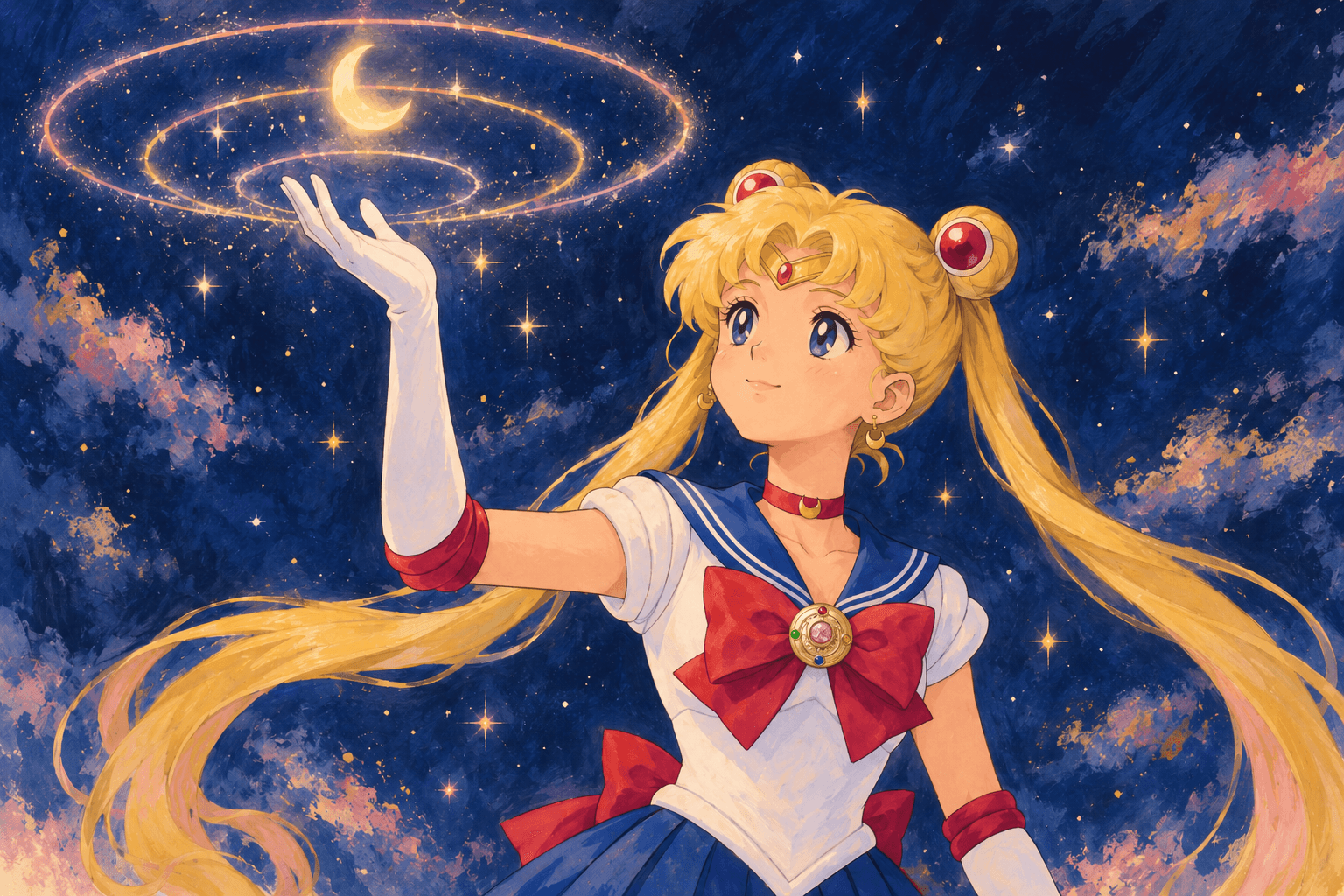
“Moon Prism Power, Make Up!” is an unusually generous way to begin a spectacle. The words announce the change, and they're also instructions a viewer can repeat. The command gives the change a clear beginning and an intention.
For a moment, the distance between watching a hero and playing one feels very small. You don't need to understand the entire mythology to know what to say.
Goku's first Super Saiyan transformation offers a useful contrast. Toei's synopsis of Dragon Ball Z episode 95 describes a sudden change in his body as anger breaks through its limit after Frieza attacks his companions. The event grows out of that crisis. Usagi's familiar command offers a different pleasure: a way to summon the extraordinary on cue.
2. The brooch makes a huge change small enough to hold

The extraordinary change begins with an ordinary-sized object. In the first episode's official synopsis, Luna gives Usagi the transformation brooch along with her new mission. An enormous responsibility arrives in a form that fits into ordinary life.
The brooch is therefore more than a decorative spot in a complicated design. It connects the girl, the command and the transformation. Magic has a point of contact.
That connection also helps explain why a replica can mean more than an accessory to someone who loves the series. The object comes with an action attached to it. Toei's retrospective records the success of the transformation-item toys. The commercial success is documented; the more intimate appeal is easy to understand. Here is a small piece of a performance you already know.
3. The familiar hair keeps Usagi's identity in view
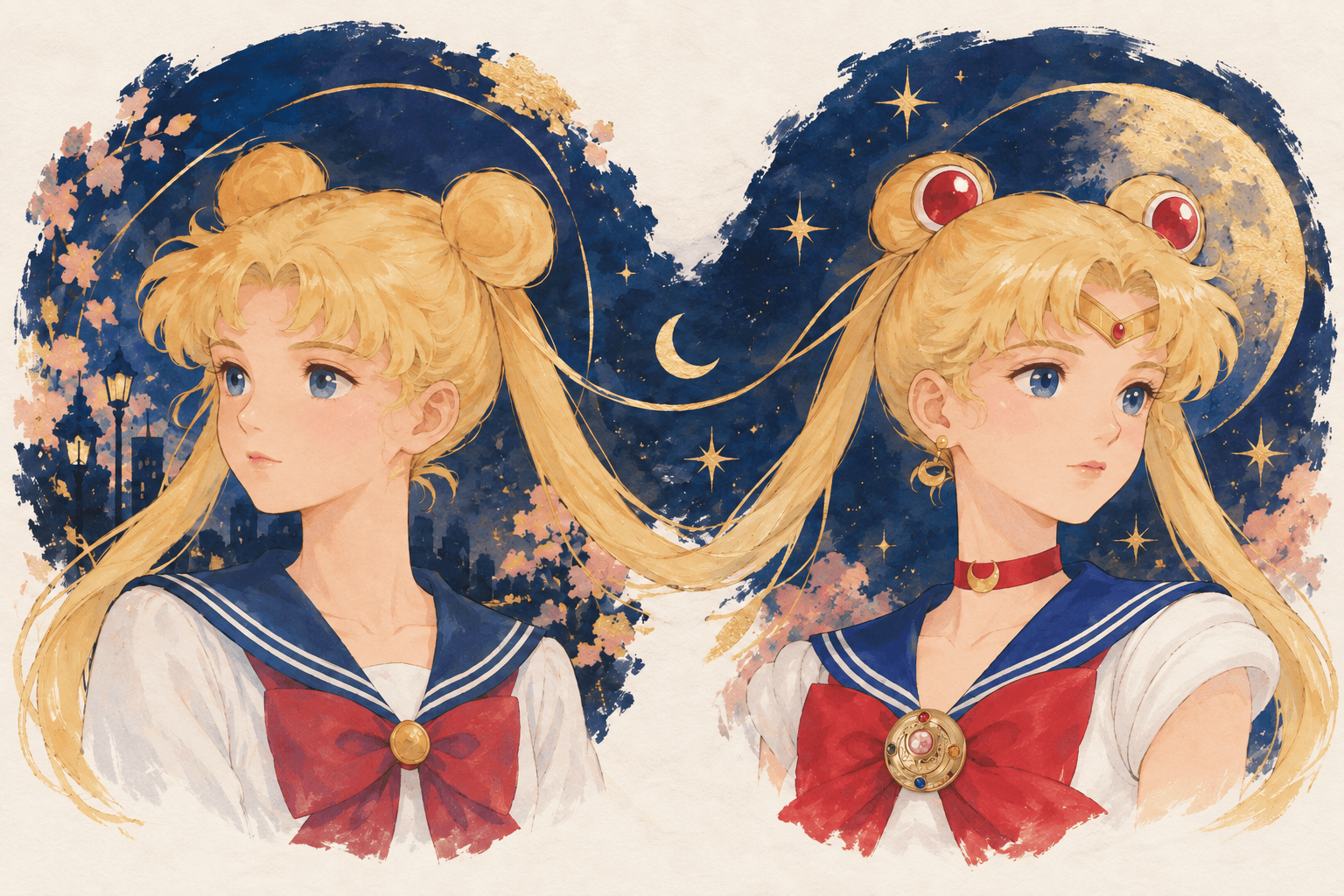
Usagi's familiar hair design offers a way to think about continuity. The heroic identity remains connected to the girl who carries it.
In a 2023 interview with Vogue Japan, Naoko Takeuchi identified the buns, the sailor-uniform identity and the characters' longstanding friendships among the things she had chosen to preserve as the work changed. That was a retrospective reflection on her creation, rather than an instruction sheet for the original animation, but it names the continuity the design makes visible.
The buns are therefore more than an ornament. In Takeuchi's account, they belong to the identity that changing costumes and adventures preserve.
4. The transformation becomes a performance of its own
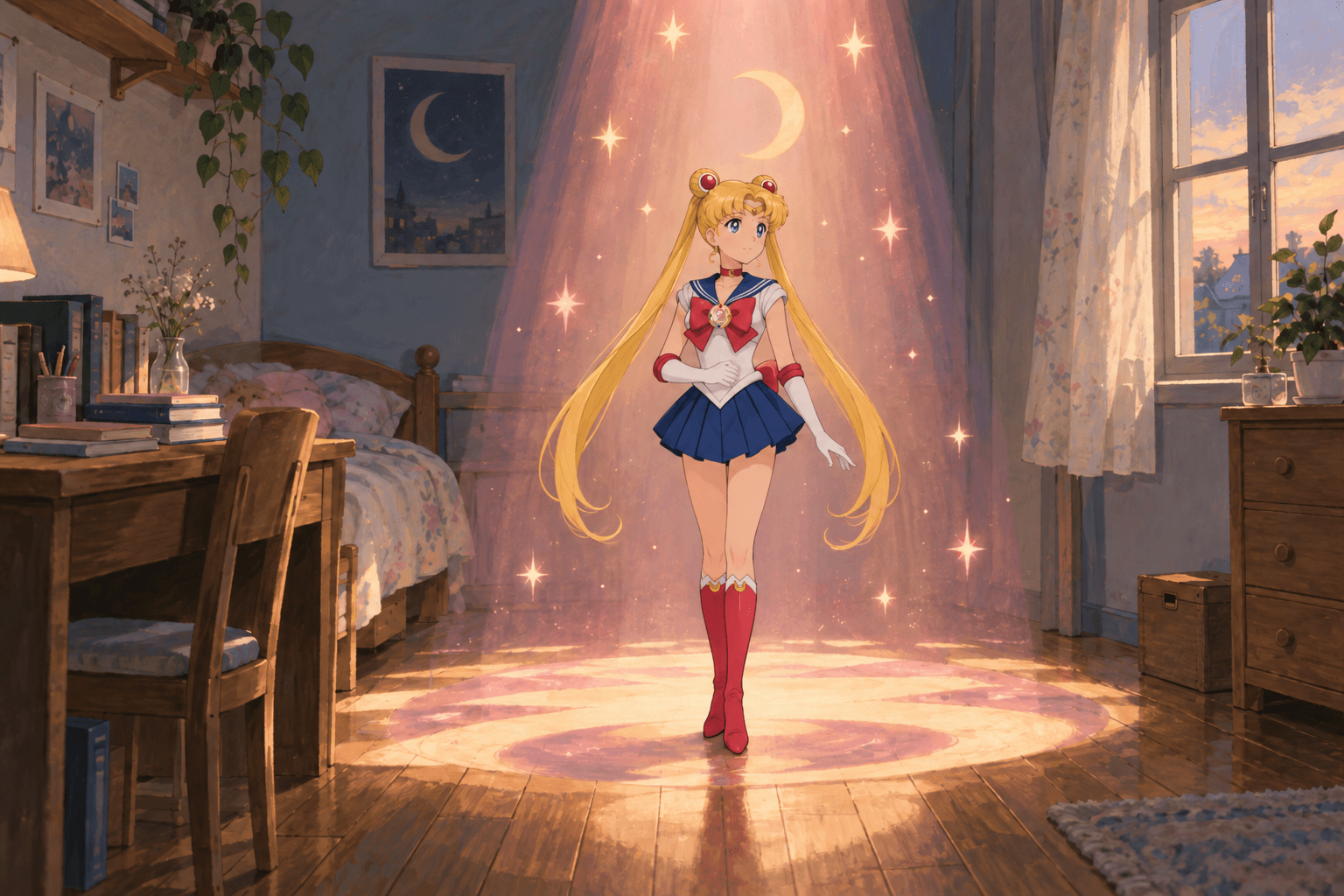
Junichi Sato's 2021 interview with WEB Anime Style offers a useful reminder of where the first transformation belongs in the story. He recalls the scene in Usagi's room; interviewer Yuichiro Oguro notes her surprise after the change.
The ordinary setting matters. This is still Usagi's life, even when the action becomes extraordinary. The transformation gives the change enough attention to feel like a small performance, while her reaction returns us to the girl experiencing it.
On a rewatch, look for that shift in attention. Where are you invited to admire the change, and where are you invited to recognize Usagi again? Thinking of the sequence as a stage is a way of reading its dramatic purpose. It doesn't require the room to become another dimension or time to stop.
5. The ribbons have work to do
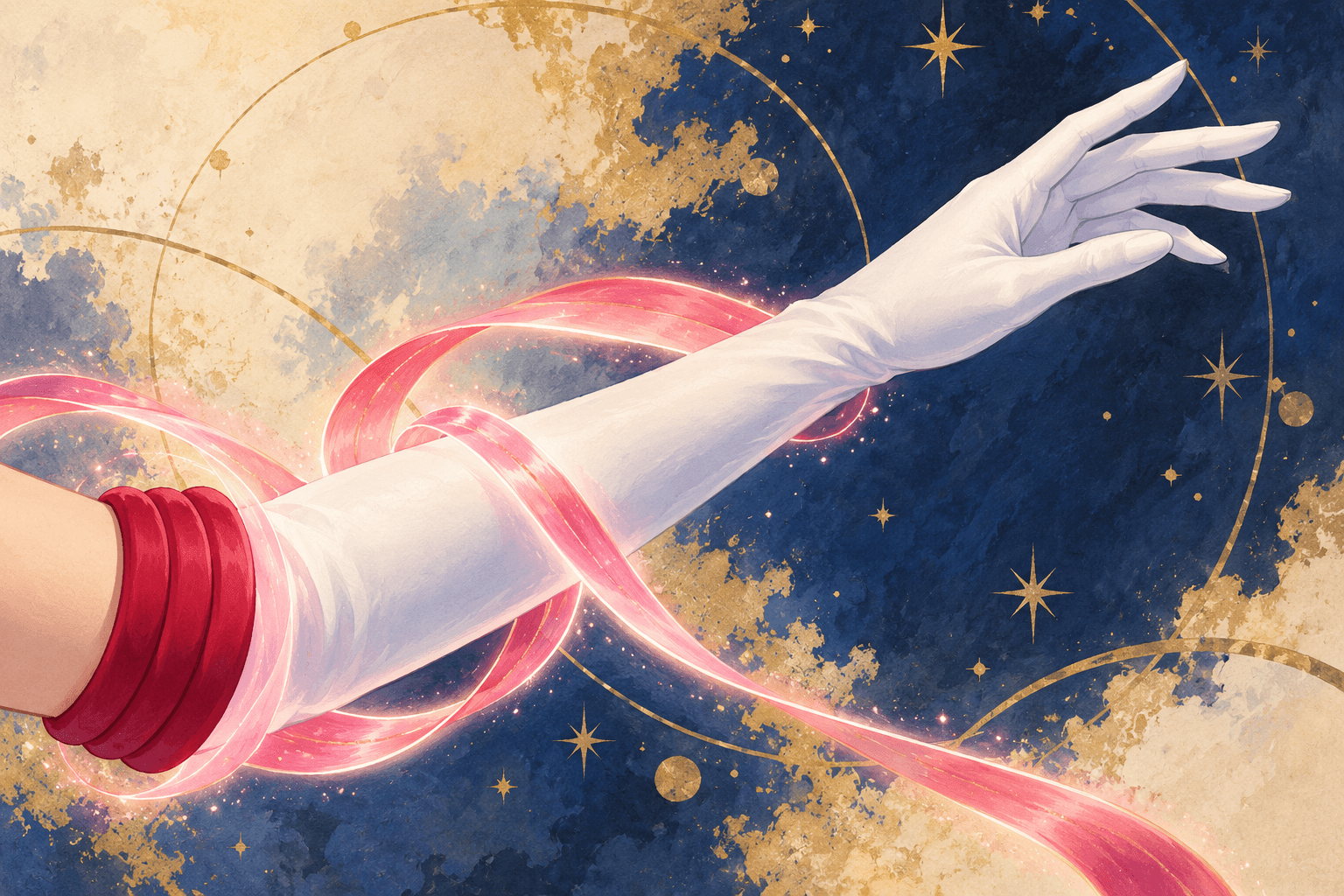
MANTANWEB's Japanese account of the original sequence describes ribbons emerging from the brooch and the costume taking shape through the transformation.
Light can announce that a character has become powerful. Sailor Moon's ribbons make that power visible through a more particular task: assembling what she'll wear.
The distinction is tangible. A ribbon has direction and a surface; it can curl, gather and resolve into a piece of clothing. The magic seems to be doing something, rather than simply filling the frame with brightness.
There's a small satisfaction in seeing a moving effect become a finished object. It gives an impossible event an intelligible process. You can't make clothes this way, but you can follow what the animation wants the ribbon to accomplish.
6. The costume arrives in memorable pieces
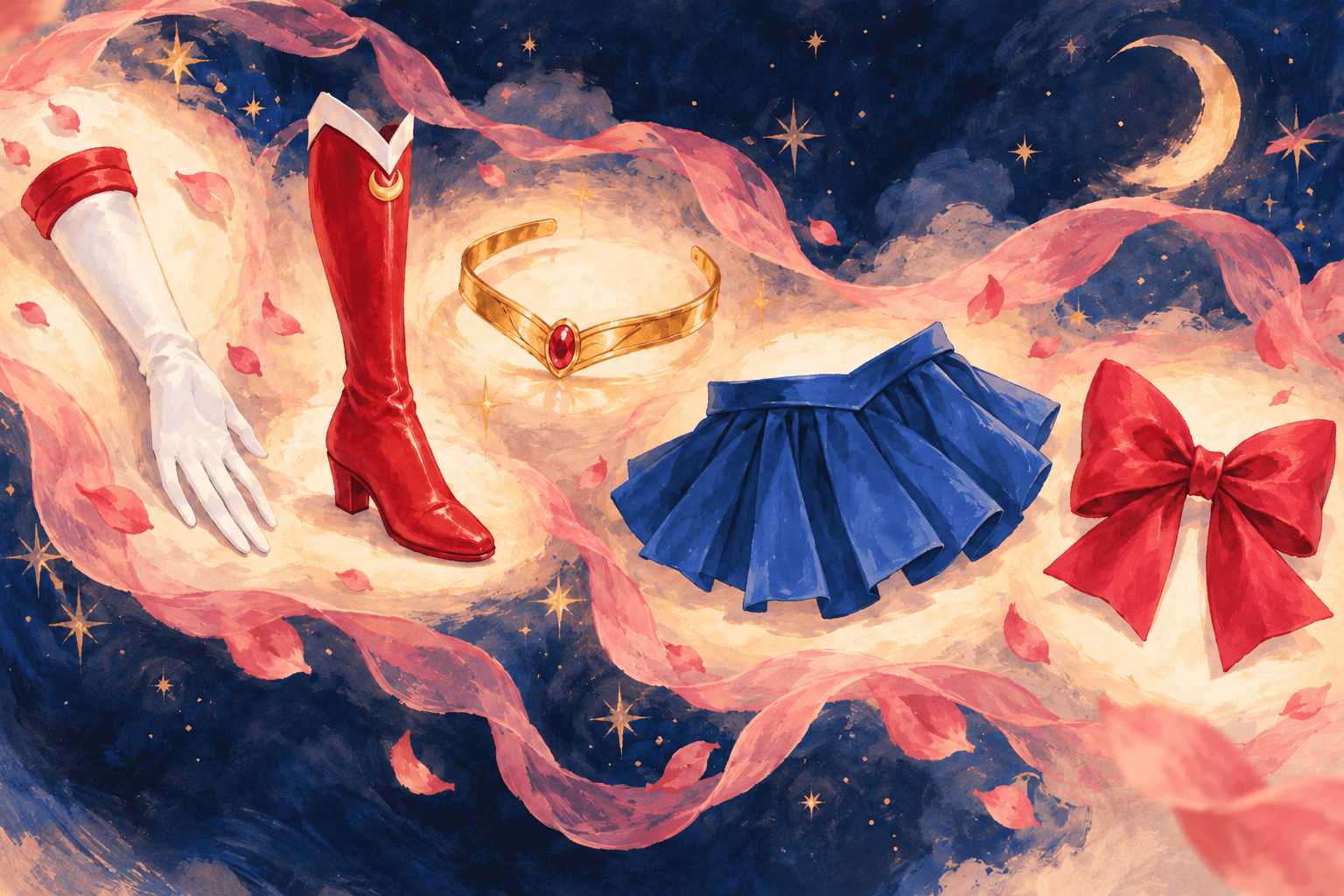
The costume assembly described by MANTANWEB does more than establish that Usagi has transformed. Giving its components separate attention does something richer. Each part gets a moment to become recognizable before the whole design comes together.
The cuts have a practical clarity. Gloves, boots, skirt and tiara don't have to compete for attention all at once. The viewer can take pleasure in the assembly as well as the result.
There's a useful production-history connection here. MANTANWEB reports Junichi Sato's recollection that robot anime influenced his approach to Sailor Moon's transformation bank: a sequence of animation prepared for repeated use. The report connects that influence with dividing the presentation into views of different parts. The account points toward an assembly tradition. It doesn't establish a creative line from Dragon Ball Z.
Seen that way, the costume reveal has something in common with the satisfying arrival of a completed machine: separate details make sense together, and the final figure feels earned.
7. Color makes the finished figure easy to read
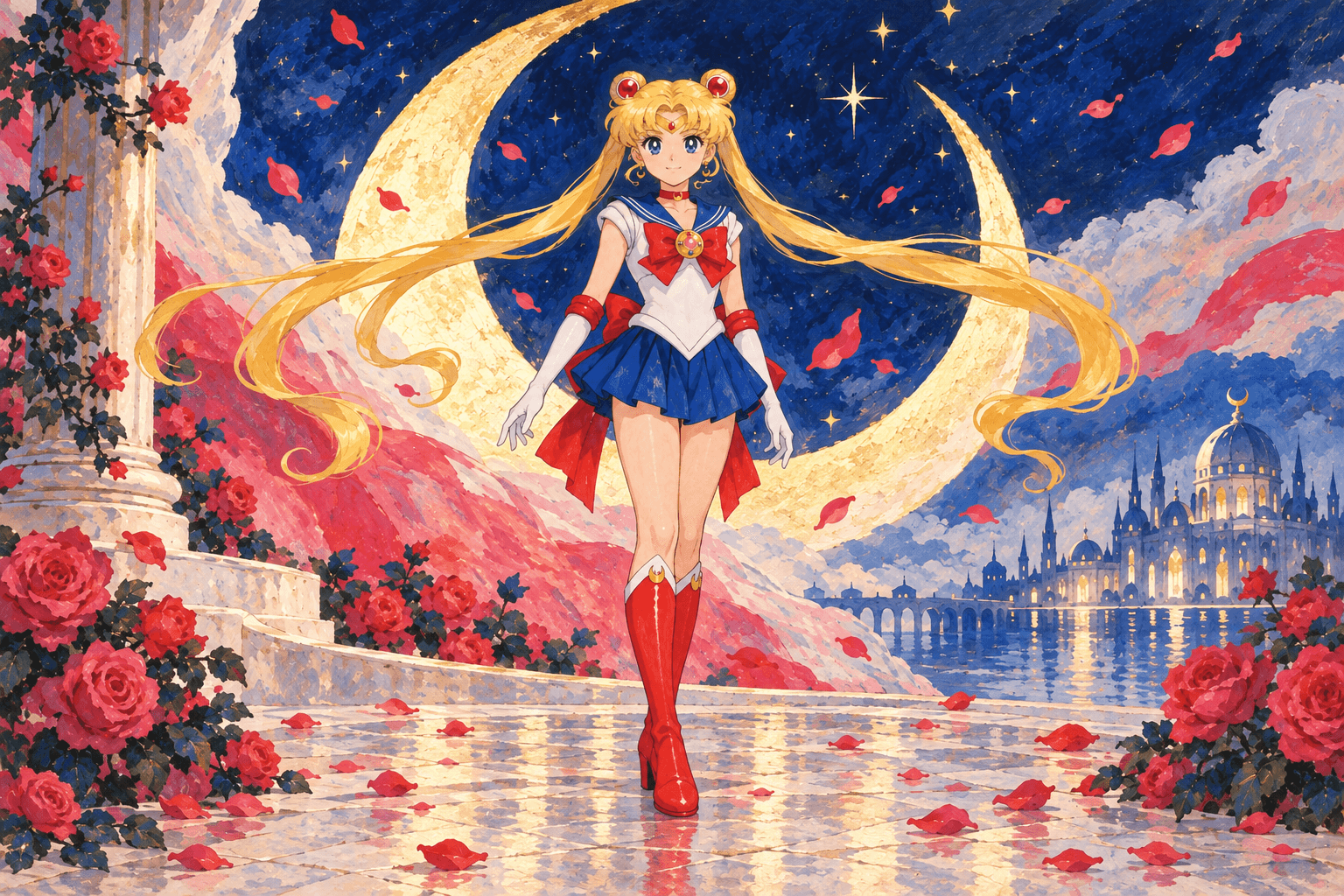
Color gives a recurring costume another set of identifying marks. On a rewatch, it's worth considering how the finished arrangement helps you recognize the hero: which areas draw your eye, and which details connect the whole?
Repetition strengthens that recognition. In the published abstract of a 2026 study, researcher Jiyon Han describes Sailor Moon's recurring transformation bank as reaffirming costume, characteristic color and the decisive pose. Those are useful things to look for on a rewatch: the sequence repeatedly establishes what a completed heroic identity looks like.
The spectacle can keep moving because its destination is visually clear. The familiar arrangement of color is one of the ways we know it has arrived.
8. The transformation has a musical identity of its own

The original soundtrack gives the ritual a name. Nippon Columbia's catalog lists “Moon Prism Power Make Up!” as track ten and credits Takanori Arisawa with its composition. The page identifies the album's original 1992 release as well as the later reissue.
On the album, the transformation piece is distinct from “Moonlight Densetsu,” the original opening theme listed first. Even the naming gives the transformation a musical identity of its own.
Recurring music gives familiar movement another route into memory. You can anticipate a performance through sound before you've taken in every detail of the picture. For this ritual, recognition can begin with the ears.
9. Repetition turns a production solution into anticipation
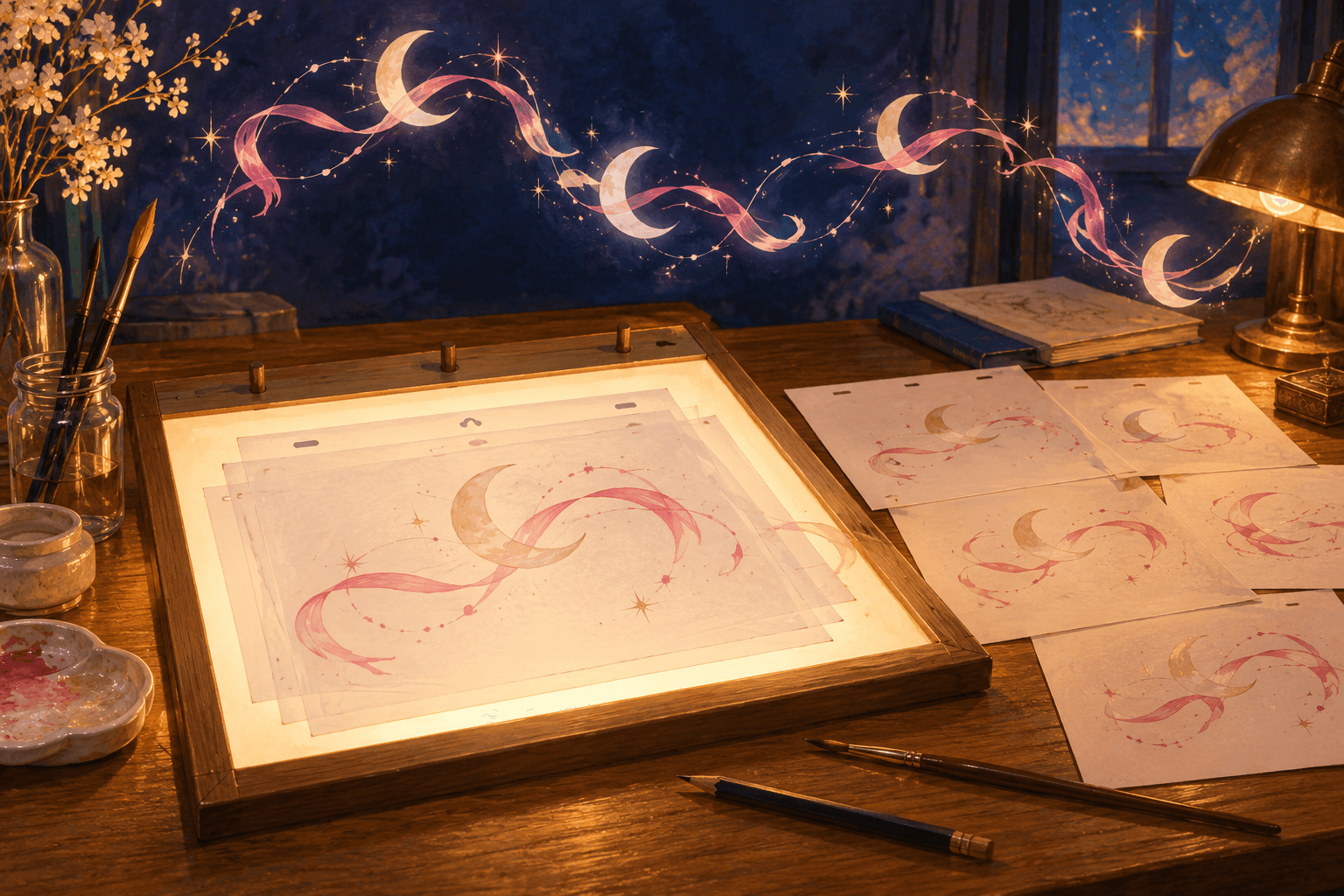
Reusing that sequence had a practical value. In a 2021 Japanese interview with WEB Anime Style, first-series director Junichi Sato recalled negotiating drawing counts and using recurring material to reduce the amount of new footage an episode required. He even joked about spreading the transformation bank's drawings across the episodes that would reuse them.
It's an appealingly concrete account of making television. Someone has to draw all those turns, ribbons and ornaments; a weekly production has to decide where that work goes.
For the viewer, though, recurrence creates a different opportunity. The first time through, a transformation reveals. Later, it can invite anticipation. A detail that once passed in a rush becomes something to look forward to. The stable sequence gives the audience time, across many encounters, to become familiar with its construction.
That pleasure helps explain why knowing the result doesn't exhaust the performance. A familiar piece of music doesn't need a new ending every time either.
SunSun may earn a commission if you buy through this link. For a closer look on a rewatch, VIZ's Sailor Moon: The Complete First Season (Blu-ray; Amazon affiliate link) collects episodes 1–46 of the original series. This Region A set has Japanese and English audio with English subtitles; check your Blu-ray player's region compatibility.
10. The pose gives the change a destination
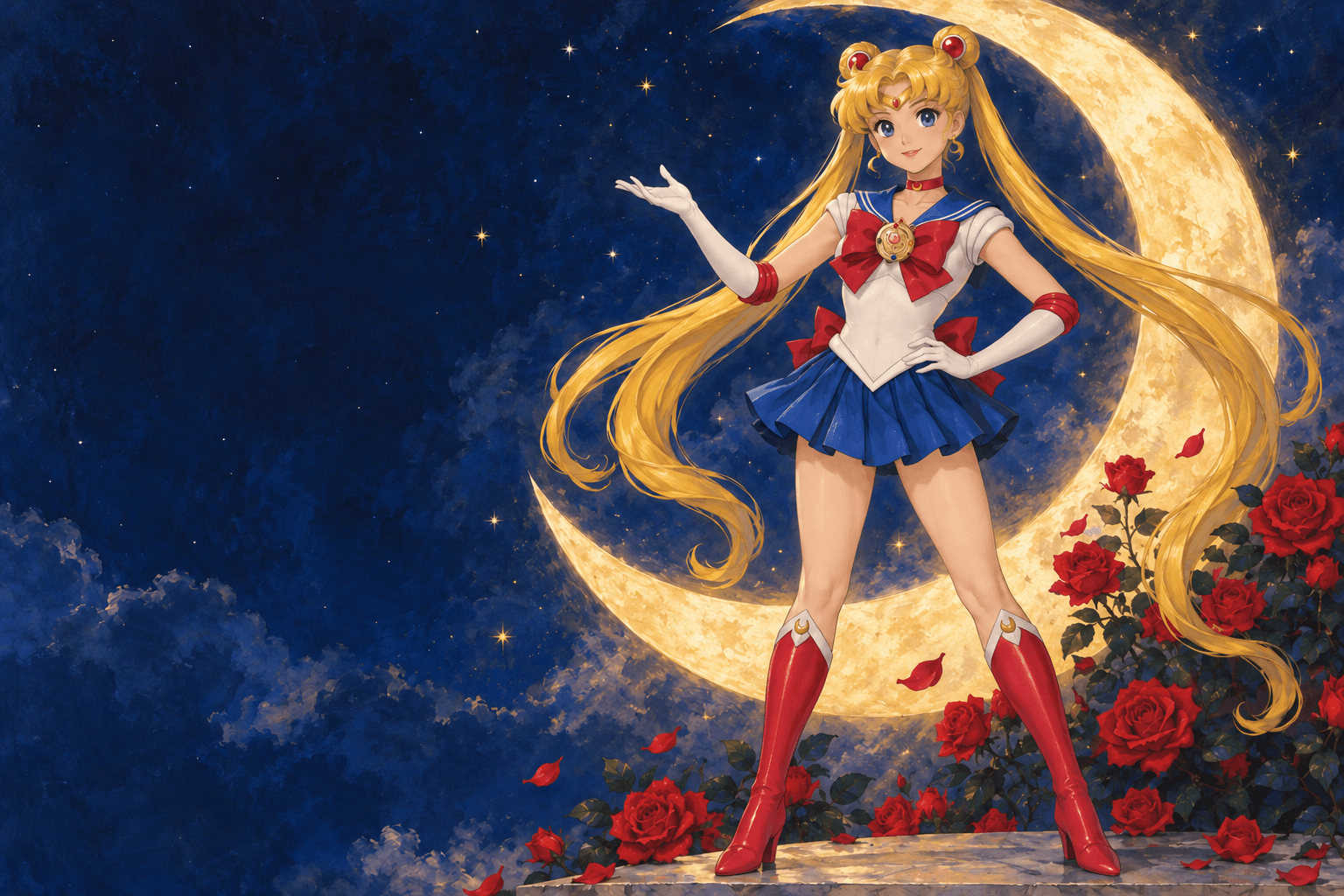
A decisive pose, one of the recurring markers identified in Han's published abstract, gives the change a destination. In that reading, it gathers costume, color and character into one image: the result toward which the ritual has been moving.
A pose is portable. It can be attempted in a mirror, held for a photograph or recalled without remembering the episode around it. The opening command invites you to start; a final pose gives you somewhere to finish.
The franchise's later filmmakers understood how much that complete performance mattered. On the official site for the 2023 Cosmos films, director Tomoya Takahashi explained that the movies' transformation scenes were not reused, so they did not function as banks in the television sense. He still felt that omitting them because they were difficult to make would fail the Sailor Moon experience audiences expected.
That's a revealing afterlife for a production technique. The practical reason for repetition can fall away while the appetite for the ritual remains.
On your next rewatch, choose one detail to follow: the brooch, the ribbons, the hair that keeps Usagi recognizable. Then watch how the final pose gives it a place in the whole. The surprise is how much there is to notice in a transformation whose ending you already know.