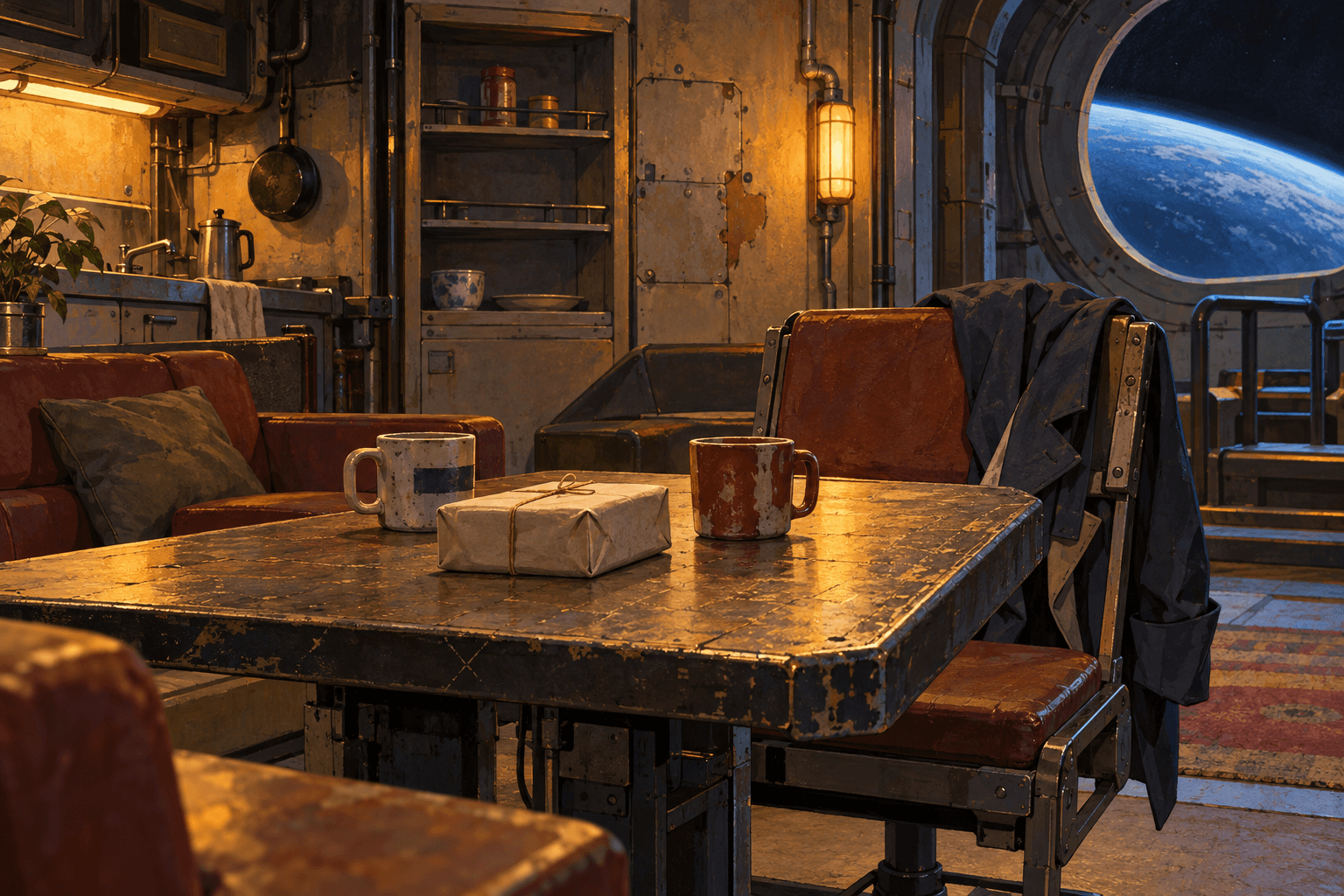
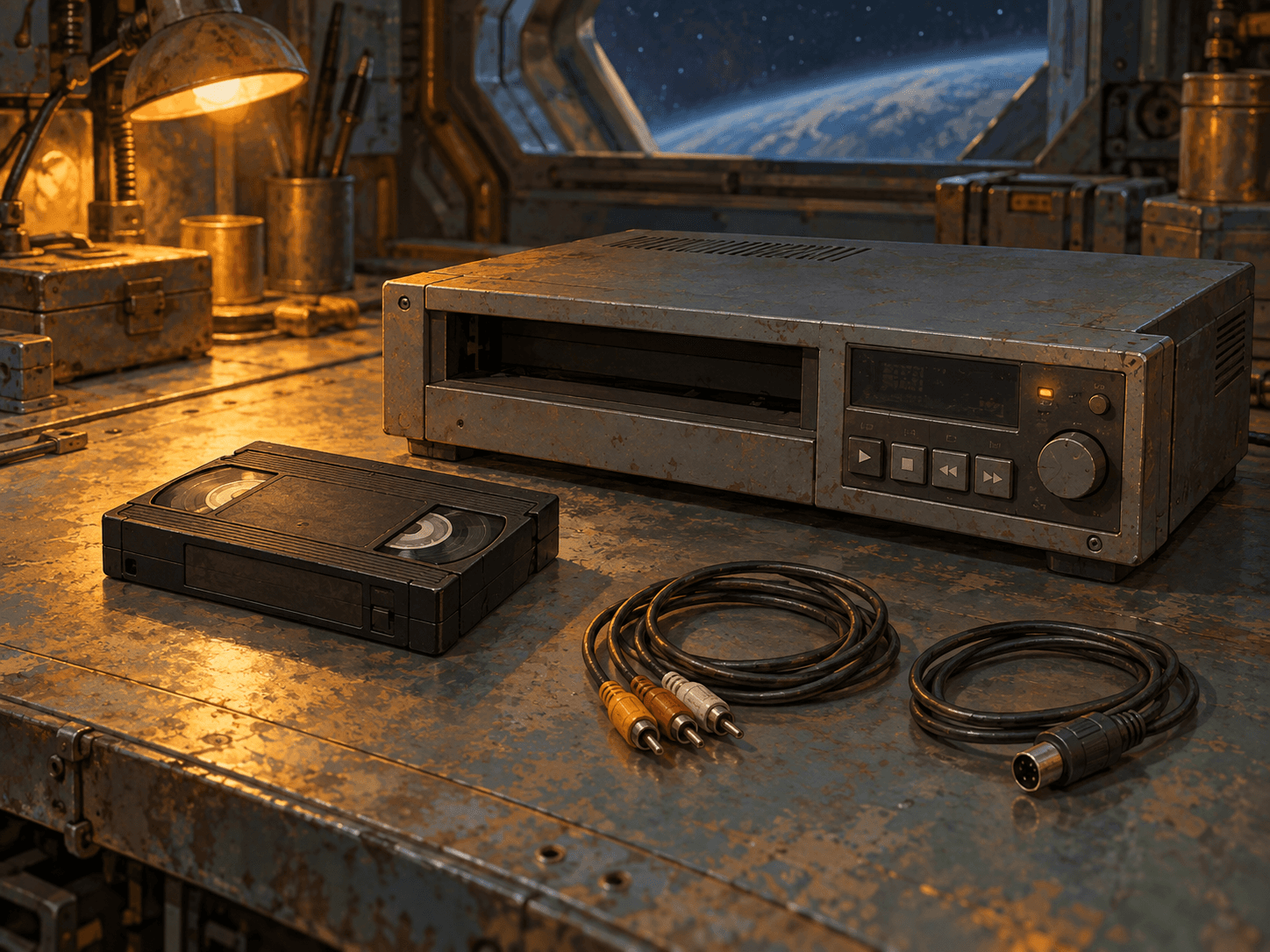
A parcel arrives for Faye Valentine. She assumes a debt collector has found her and leaves before opening it. Inside is a videotape. This ought to be a small domestic inconvenience, except that the people left with the package are bounty hunters aboard a spaceship, and playing an obsolete recording turns out to require an expedition. By the time Spike and Jet can see what is on it, Cowboy Bebop has made room for an adventure about finding the right machine. The official Japanese episode guide identifies it as a Beta videotape.
The series' future is full of these unequal advances. Planetary travel has become routine; a format mismatch can still stop everything. The discrepancy gives the setting texture, but it also provides a way of getting close to its inhabitants. Faye's first explanation for an unexpected delivery is that somebody wants money. Spike and Jet initially investigate what they might get for the object. Long before its images disclose anything, the tape has shown us the habits of the household it has entered.
The ship is called the Bebop. Spike, formerly involved with organized crime, works alongside Jet, an ex-policeman. Faye, the hacker Ed and the dog Ein complicate their arrangements. The series' own introduction calls it a strange communal life. That description seems almost modest beside the guns, chases and music, but it is a useful place to begin. The characters do not simply assemble for missions. They have to occupy the same address between them.
A glamorous profession provides no guarantee that the address will be comfortable. Sunrise's character guide explains that Spike's rough methods can consume his bounty earnings in compensation payments. His ability to survive a job and his ability to make it pay are separate skills. In “Gateway Shuffle,” the problem is more direct: he catches a wanted woman, and her bounty is canceled before he can collect. The accomplishment has occurred. The income disappears.
This rhythm gives the episodes an unusual freedom. Another chase need not lead to greater wealth, a better ship, or a more secure place in the world. The characters can be very good at the exciting part of work and remain vulnerable to its terms. A series built around that mismatch has a reason to return to the same shabby rooms. Each spectacular excursion can leave the household with much the same practical problems.
A ship someone could afford
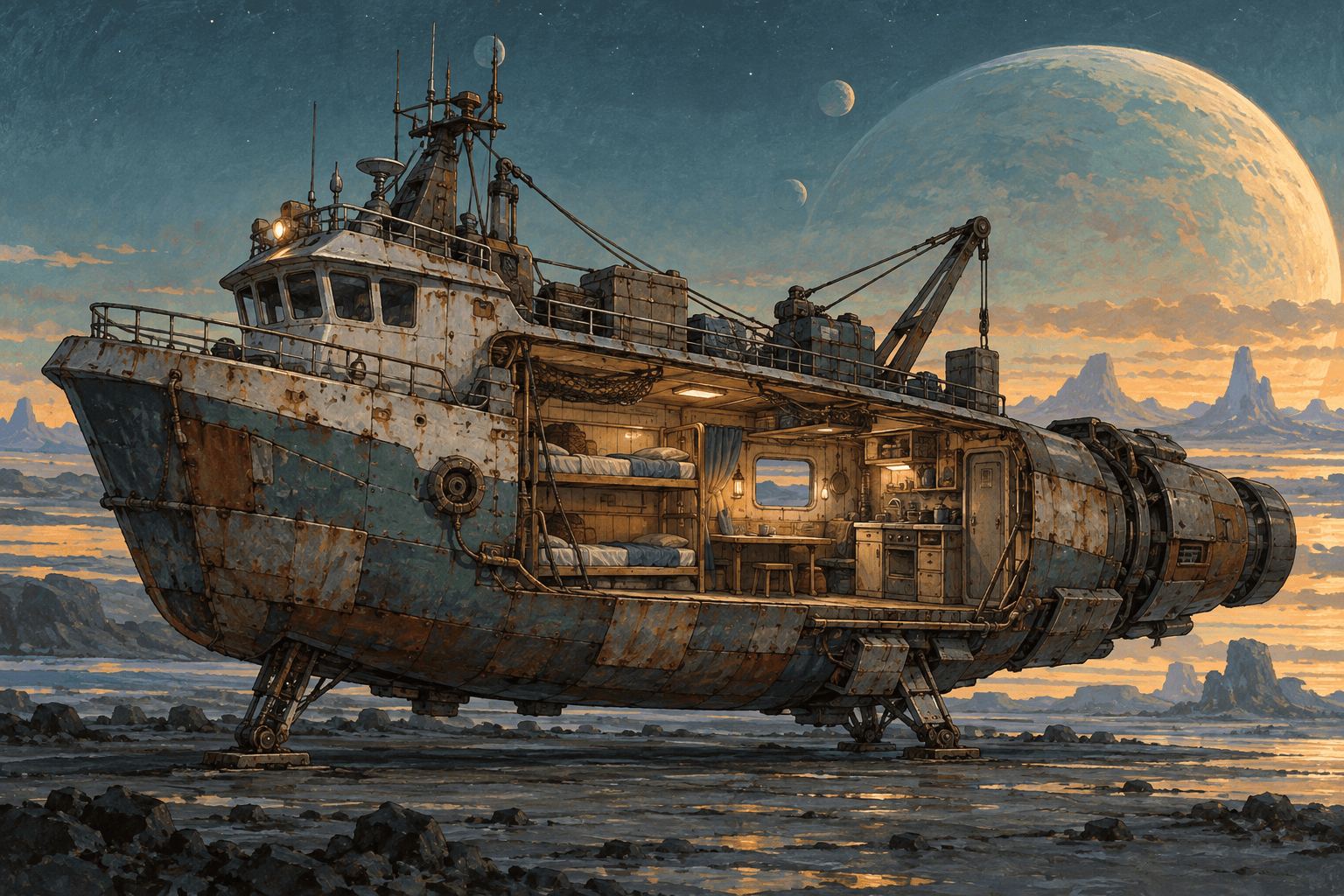
Mechanical designer Kimitoshi Yamane made those problems part of the setting's construction. In a 2023 Japanese interview for Sunrise World, he explained that the crew did not seem wealthy enough for a luxurious cruiser. A fishing vessel suggested a more precarious livelihood. He wanted the Bebop to feel like a home, and gave it no weapons. The smaller craft, too, belonged in a world of used cars, with the wear of things that people keep running.
The ship's official history follows that logic. Jet bought and converted a secondhand vessel formerly used for whaling on Ganymede. It serves as both transport and residence. This is a striking choice for a science-fiction series: the place to which its characters return has already had a working life before them. Sunrise's guide treats the conversion as an ordinary part of the machine's identity.
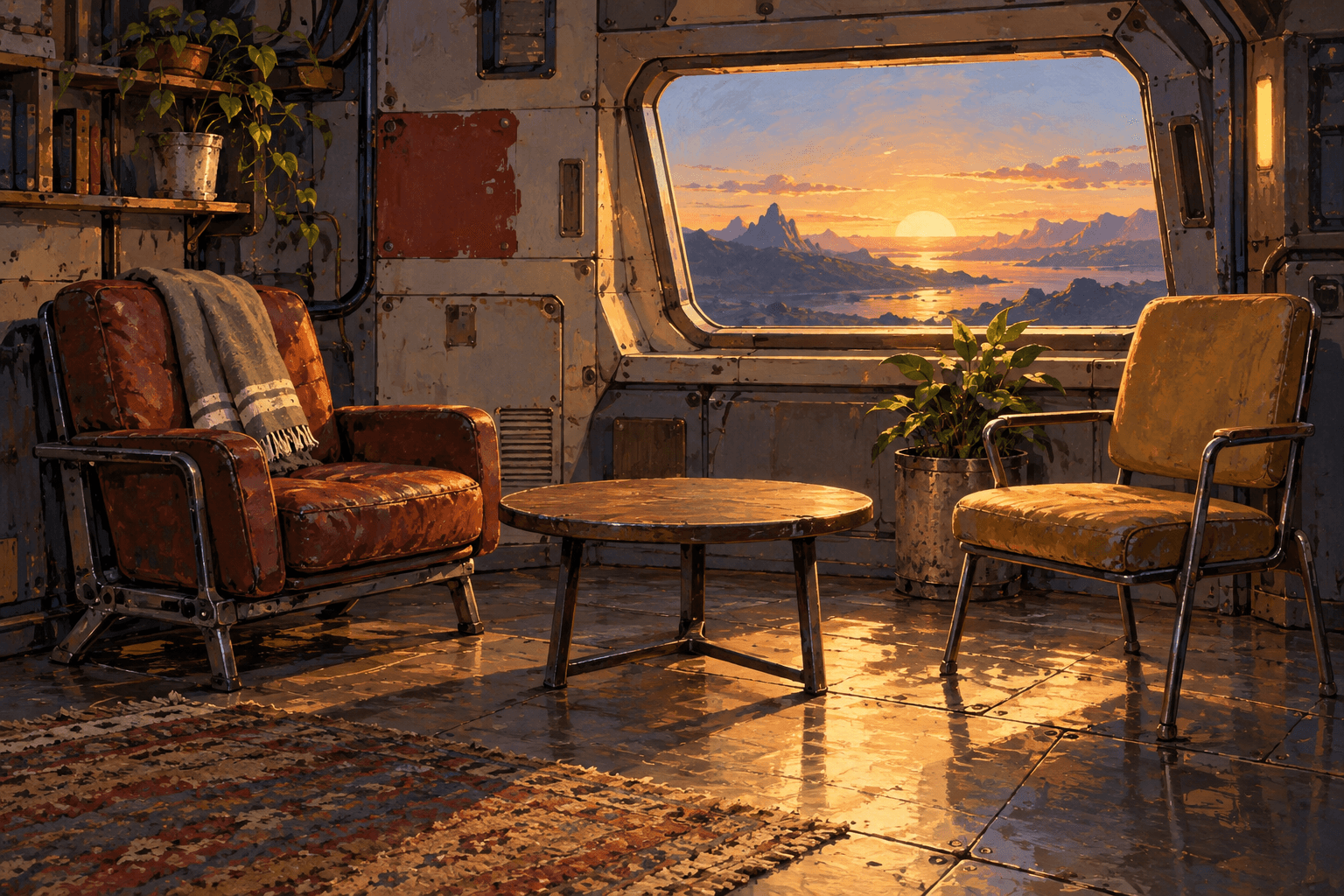
A reused boat permits a different kind of attachment from a gleaming command center. Its occupants inherit the purposes and limitations of somebody else's equipment. Their own needs have to fit. Even the name can begin to sound less like a military designation than the name of a place where one might know which seat belongs to whom. The story has a physical container for the untidiness of shared life.
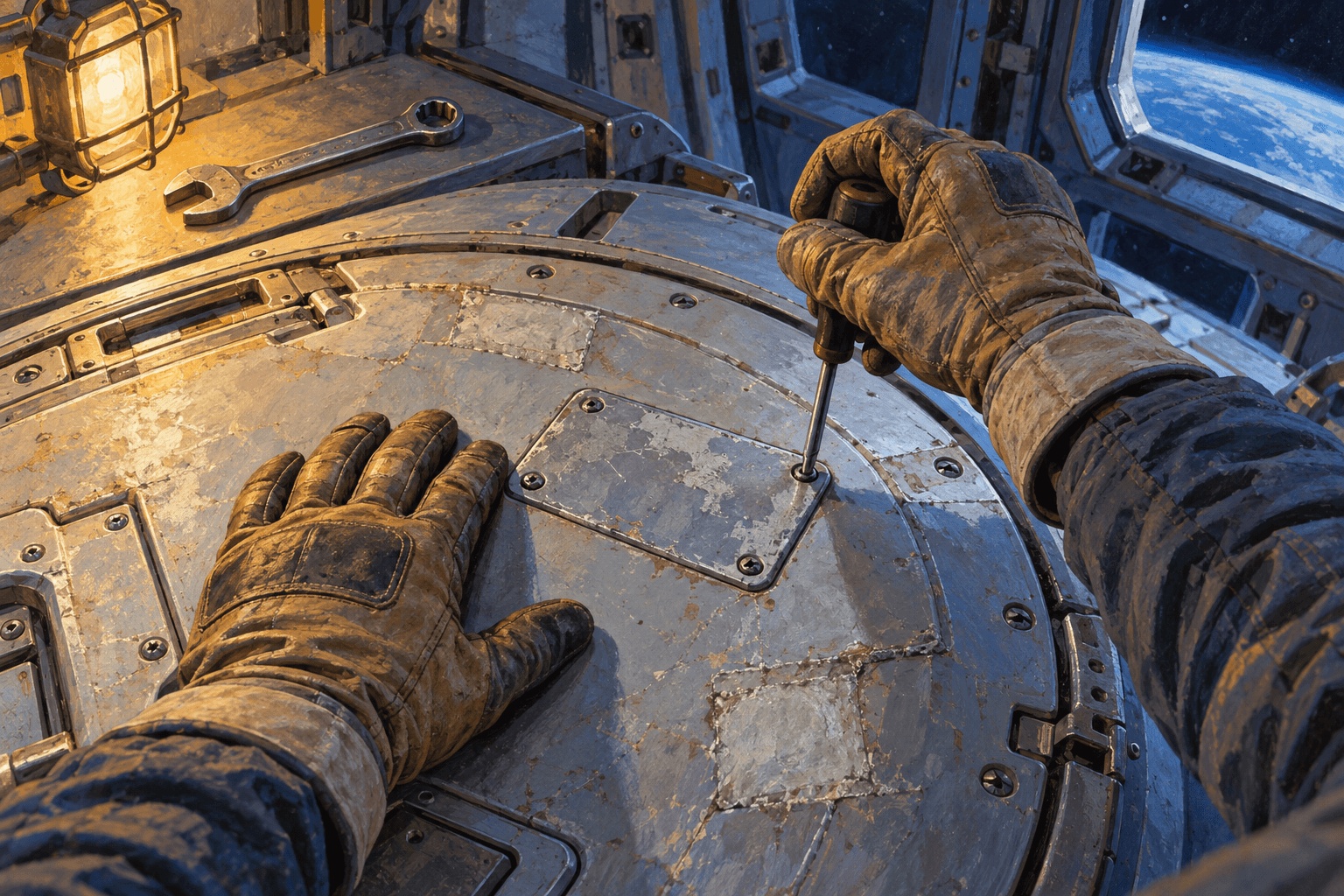
Yamane's account also gives the worn surfaces some authors. He recalled the animators adding scratches to the hatches and bodywork, while character designer Toshihiro Kawamoto asked him to simplify certain details so the vehicles could be drawn. Wear was made visible through decisions shared between departments. An old-looking spacecraft still had to be a workable design for a television production.
An overhaul takes Spike to the mechanic Doohan in “Wild Horses.” In “Mushroom Samba,” Ed and Ein go looking for food. The episodes begin with maintenance and hunger, putting adventure within reach of a service appointment or an empty cupboard.
The work inside the apparent ease
The show also knows how to sound as though it has wandered away from its business. Its next-episode previews can feel like the cast enjoying a small freedom at the edge of the program. Asked in a 2024 interview whether their casual delivery was improvised, Kōichi Yamadera, the Japanese voice of Spike, rejected the suggestion. There might have been occasional changes of phrasing, he allowed, but the previews were not ad-libbed.
It is a useful correction to the idea that Bebop's looseness simply happened because talented people were having a good time. Writing can make space for a voice to seem distracted, amused or reluctant to cooperate. The performer then has something to do besides announcing next week's events. At the edge of a tightly timed television episode, the program offers a little more company.
The comedy received serious attention elsewhere as well. An official report of a 2012 cast event records writer Dai Satō discussing “Cowboy Funk,” the episode with Spike's extravagantly self-styled rival Andy. Head writer Keiko Nobumoto wrote its script, and Satō recalled that its drawing count exceeded the finale's. The point is the production's commitment to an apparently incidental comic episode. The report does not supply the underlying counts, and the pleasure of the episode needs no numerical ranking.
There is a consequence to granting this much room to the everyday and the ridiculous. The crew's shared life becomes substantial enough to compete with the grander stories each person carries. We know that an unfinished past can demand attention. We also know there is somewhere to return to afterward, where somebody may have eaten the food or left another problem unresolved. Spending time there gives leaving a cost.
The parcel for Faye eventually reveals a recording of her younger self, before the loss of memory that has broken her connection to that girl. The machine has recovered an image without restoring the intervening life. What began as another possible financial nuisance turns out to have been sent forward from a time when she could imagine the person she would become. Spike and Jet have found a way to play it. They cannot make her remember.