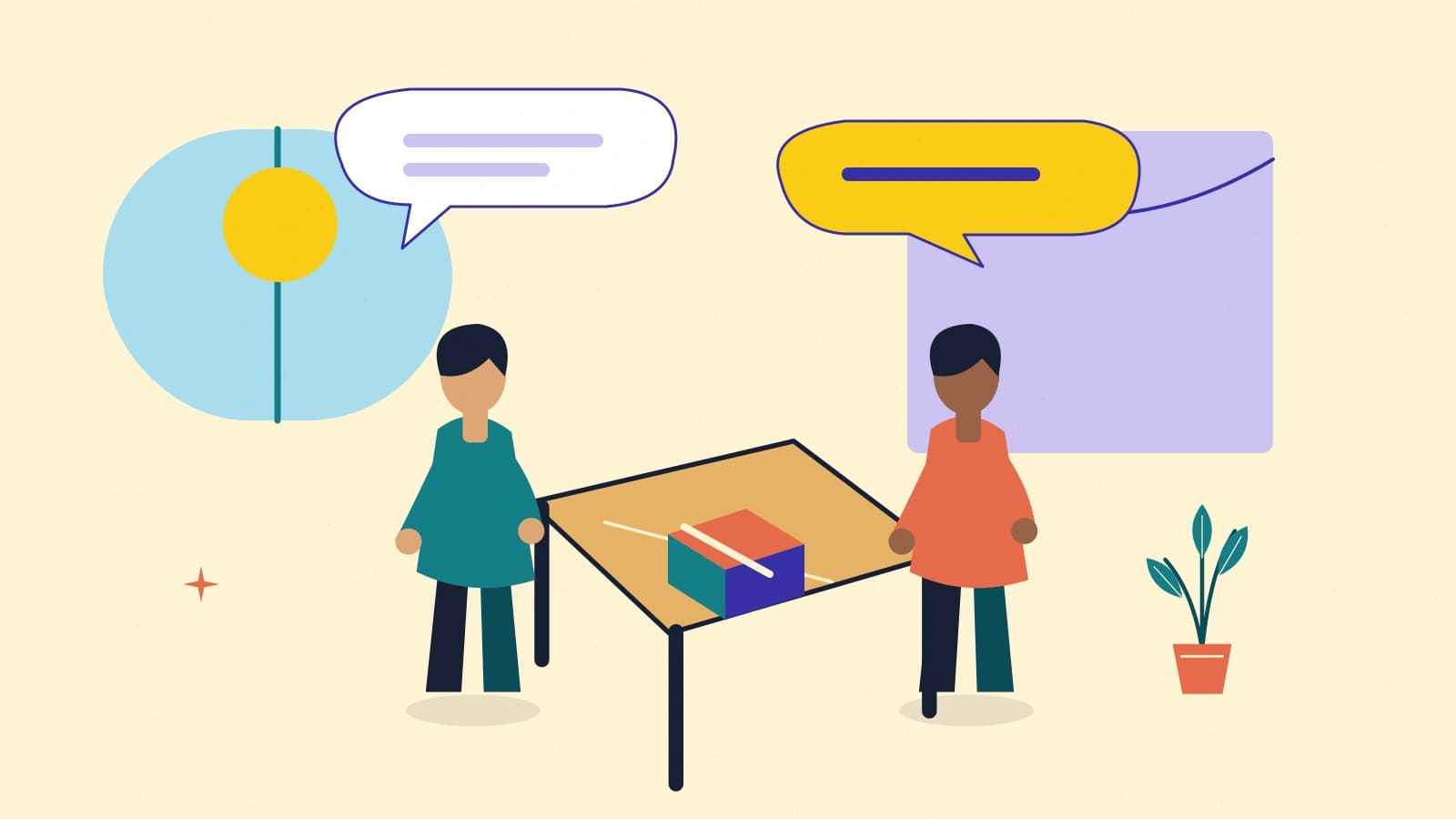
Here is a tiny exchange written for this article:
“Did you book a table?”
“Yes. It arrives tomorrow.”
It is a modest joke, but it gives us something useful to examine. The first speaker appears to mean a restaurant reservation. The answer treats the table as an object being delivered. The change in interpretation is the event.
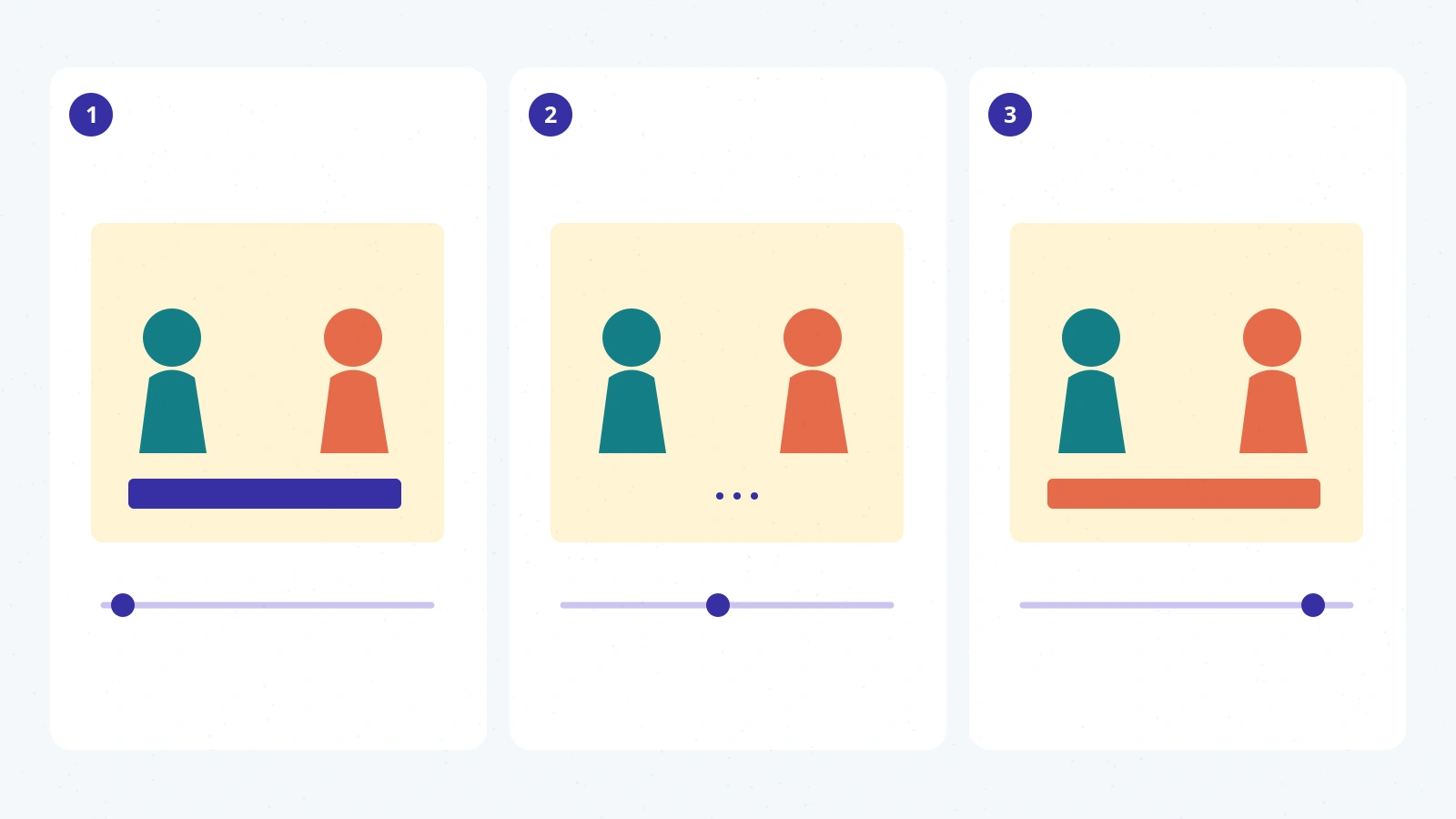
Now imagine both lines appearing on the screen before the second person opens their mouth. The words have not become inaccurate. The audience has simply been allowed to arrive at the surprise before the performance does.
That is why translating screen comedy is more than finding a clever equivalent. The subtitle also has to arrive, remain readable, and leave in relation to speech, image, and reaction. A good line can still be badly timed.
The reader and the actor do not travel at the same speed
Netflix’s subtitle-timing guidelines explicitly caution against revealing punchlines or major plot information early when there is a visible reaction on screen. They also connect subtitle timing to both the audio and the edit, and call for watching the finished file back rather than judging isolated subtitle events. These are Netflix’s delivery requirements, not a universal law for every broadcaster or platform. 1
The underlying tension is easy to imagine. A viewer can read ahead within a block of text. An actor may still be making room for a pause, a look, or an interrupted thought. If the text reveals the answer immediately, a carefully performed hesitation may become time spent waiting for something the viewer already knows.
Splitting our invented exchange into separate subtitle events would preserve the possibility of the second line arriving with its speaker. But a split is not automatically a solution. If the answer flashes by too quickly, it preserves the surprise at the expense of comprehension.
Timing has to serve both. A punchline that nobody can finish reading has not been rescued.
A pause can be doing actual work
In the table exchange, imagine the second speaker looking toward a delivery notice before answering. That glance might prepare the joke. Or imagine a completely sincere answer delivered without hesitation, leaving the first speaker to absorb the absurdity afterward.
Those would be different performances of the same words. A subtitle file should not be treated as if the written dialogue already contains the whole comic rhythm.
A pause can create uncertainty, indicate that someone is choosing their words, or let a reaction become the focus. Those are possible functions, not a code by which every pause has one meaning. The point is to examine the actual sequence rather than apply a fixed delay to anything labeled comedy.
Sometimes a viewer needs text before all of a phrase has been spoken because the phrase must remain readable. Sometimes a line break can organize the information without concealing words. The interesting work lies in deciding what can be adjusted without turning the subtitle into a competing performance.
Translation changes the available timing
Our sample joke depends on an expectation attached to a phrase in English. Another language may use a restaurant-reservation expression that does not invite the same misunderstanding. A literal translation could preserve the words and lose the turn.
A translator might look for a different ambiguity that fits the scene. But the image imposes constraints. If the camera shows a restaurant booking confirmation, a translated joke about purchasing a chair could create a contradiction. If a later scene actually delivers the table, the replacement needs to remain compatible with that event.
These are hypothetical translation problems, not examples of a particular released film’s subtitles. They show why “translate the joke rather than the words” is a useful starting thought but not a complete instruction. The joke belongs to a scene with visible objects, character voices, and consequences.
The target language may also need more or fewer words to establish the misunderstanding. That affects how the text can be divided across the available time. A subtitle can therefore require rethinking its timing after translation, not just substituting a new string inside the old timing box.
Line breaks carry meaning too
Netflix’s English timed-text guide includes reading-speed limits and instructions to break lines without unnecessarily separating closely connected grammatical elements. Such specifications define a delivery framework for that language and service. They should not be copied indiscriminately into every language edition as though scripts and reading conventions were identical. 2
For a simple reading exercise, compare a sentence displayed as a complete thought with one broken between a negation and the action it qualifies. The second arrangement may briefly invite the wrong reading. In a joke, a momentary misreading could seem amusing by accident while undermining the actual exchange.
There is a difference between preserving an intentional misunderstanding in the dialogue and accidentally creating one in the typography. A subtitle should not manufacture a joke by making the language harder to follow unless there is a clear, defensible creative reason within the source.
The line’s visual shape matters, but a tidy rectangle is not the only goal. Meaning should remain easy to assemble while the viewer is also watching the scene.
Do not confuse condensation with permission to rewrite
A subtitle may have limited room to carry a fast exchange. That creates pressure to choose what is essential. The pressure does not make any shorter or funnier line an acceptable substitute.
In our invented example, changing “It arrives tomorrow” to an insult might preserve a quick comic beat while changing the relationship between the speakers. The original misunderstanding would become deliberate hostility. Even if an audience laughed, the translator would have altered more than wording.
A careful review asks what the line establishes. Is the speaker mistaken, evasive, playful, boastful, or genuinely literal? What information must remain available for the next line to work? Does the replacement preserve the character’s stance as well as the basic event?
Those questions are especially important when a joke contains an idiom or a cultural reference. Explaining everything can bury the rhythm. Removing everything unfamiliar can flatten the voice. There may not be one perfect solution, but the compromise should be visible to the reviewer rather than disguised as an inevitable translation.
Review the moment, not just the sentence
For a practical exercise, use the two-line exchange above rather than copying a film clip. Read the setup aloud, pause, and then read the answer. Have another person display the whole exchange at once, then display each line with its delivery. The exercise is a way to notice timing, not a controlled audience study or evidence of one optimal duration.
For real editorial work, the final check belongs with the authorized audiovisual source and a reviewer who can assess the target language. A correct script on a page cannot verify whether text obscures a visual detail or anticipates an actor’s reaction.
This article draws on published style guidance; it does not claim a new subtitle test across Sun Sun’s languages. Its central distinction is simpler: accuracy includes what an audience learns, while timing shapes when they learn it.
A well-handled subtitle gives a translated joke a chance to unfold with the scene. The words need to make sense. They also need to let the surprise happen.