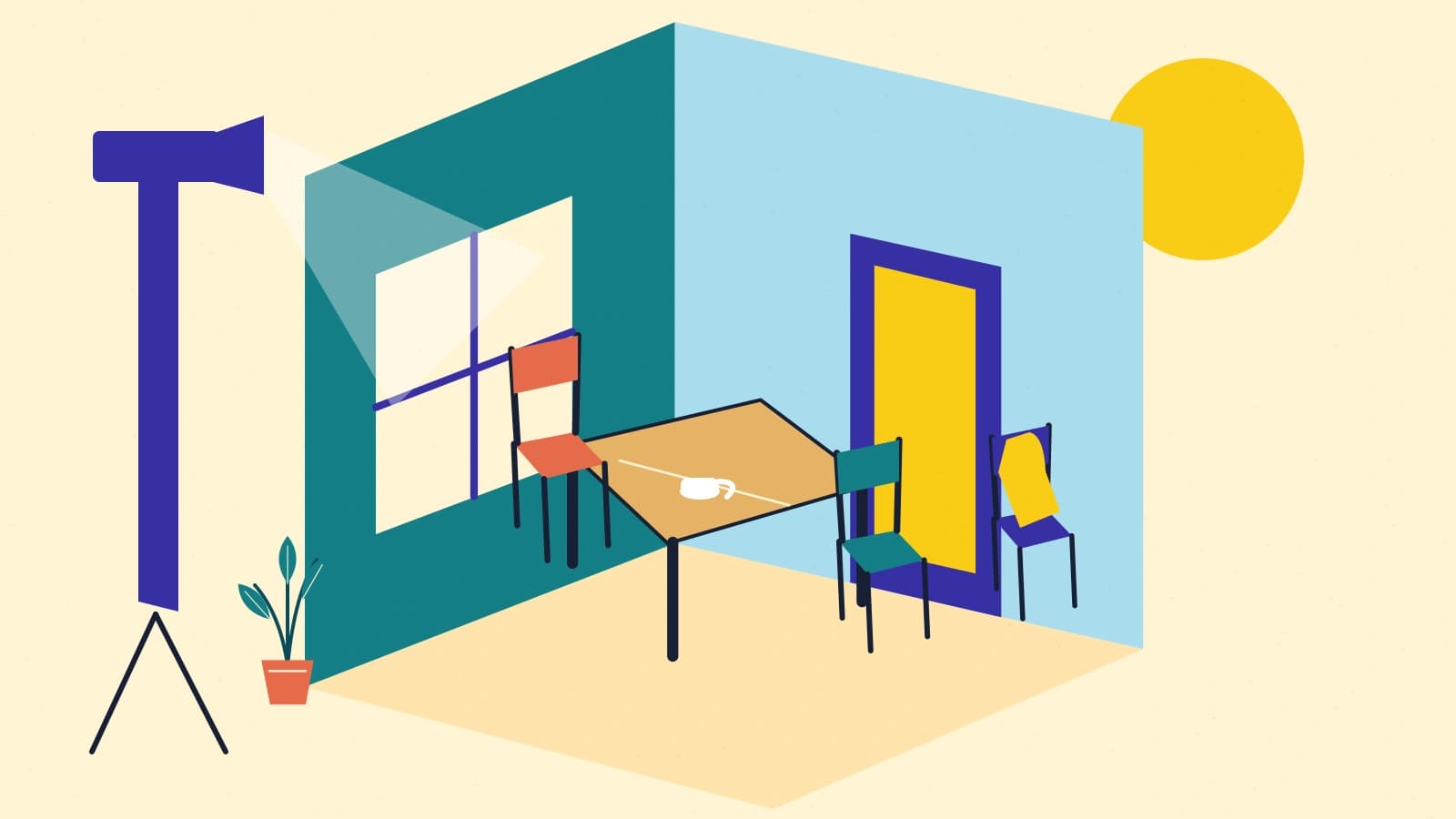
Before anyone enters, a room can make a suggestion. Two chairs face each other across a crowded table. A third waits beside the door. A coat is folded carefully over its back, but the cup nearby has been left unfinished.
This room is invented. We do not know who lives there or why someone left. Yet we already have questions. Is the third person expected? Is the room arranged for conversation or negotiation? Does the coat signal a hurried departure, a regular habit, or nothing more than a convenient place to put it?
Production design becomes interesting in precisely that space between something we can see and a story we begin to imagine. It creates material conditions for the drama without requiring every object to carry a hidden message.
A world is made by several kinds of work
ScreenSkills describes a production designer’s responsibilities in terms of developing and coordinating a production’s visual world, working with the director and other departments, and managing the practical realization of that design. Its separate set-decorator profile addresses the furnishings and dressing that help give environments their character. These are connected roles, not a reason to credit every visible detail to a single person. 1 2
That collaborative boundary matters when discussing a scene. A chair’s placement interacts with an actor’s movement and a camera’s position. A surface changes under lighting. A carefully chosen object may barely appear in the final frame.
Calling the result “the set” can hide those relationships. The pleasure of looking more closely is not assigning ownership from a screenshot. It is noticing how a place has been made available for performance: where people can sit, what they can reach, what blocks a view, and what remains conspicuously open.
The room is not simply an illustration behind the actors. It can give them things to do.
Absence can make a world feel designed
In a Filmmaker interview about Barbie, production designer Sarah Greenwood and set decorator Katie Spencer discuss the importance of what their toy-like environments leave out. Open houses and carefully controlled spaces create a different relationship to backgrounds than ordinary enclosed rooms. They also describe studying a dollhouse and working with altered proportions. These are their explanations of a particular production, not a formula for interpreting every colorful set. 3
The useful surprise is that a visually abundant world can depend on subtraction. More objects would not necessarily make the idea clearer. An absent wall changes what can be seen; an exposed interior changes the relationship between private space and the world around it.
Return to our imaginary room and remove the door. The chairs, table, and coat remain, but the suggestion of enclosure changes. Now remove the spare chair. A possible invitation disappears. Neither adjustment requires an explanatory line of dialogue.
This does not mean viewers will all reach the same conclusion. It means the arrangement can make some questions available and make others less likely to arise.
Start with use, not symbolism
A tempting way to analyze a set is to translate every color into an emotion and every object into a clue. That can produce a confident interpretation very quickly. It can also run ahead of the evidence.
Try a more concrete first pass. What activities does the space permit? Is there room to move around the table? Can someone at the far end see the entrance? Where would a person put a bag? Is the only comfortable seat also the most exposed one?
These questions describe relationships in the image before assigning psychological motives. If one character has to stand while another remains seated, the arrangement may help shape the scene’s social tension. But the furniture alone cannot establish the characters’ intentions.
In our fictional room, the chair by the door could become the place from which someone keeps trying to leave. That is a possible staging choice. Until a performance or narrative supplies it, we should not claim the chair proves a desire to escape.
Attention gets more interesting when observations remain specific and interpretations remain open.
Wear can suggest time without supplying a biography
Now imagine two versions of the same table. One has a flawless surface. The other has a ring left by a cup and a repaired corner. The second contains visible traces that invite us to imagine use.
Those traces do not tell us exactly who caused them. Nor does neatness prove happiness, wealth, discipline, or any other personal quality. A pristine room might be new, carefully maintained, staged for a visitor, or simply part of a stylized world. An untidy one need not be a moral judgment on its occupants.
The most useful comparison is often internal: how do spaces differ within this particular film? If one environment is unusually pristine compared with everything around it, that contrast may deserve attention. The interpretation becomes stronger when connected to the scene’s actions rather than to a universal dictionary of objects.
A repaired item can also complicate an impression. It might suggest affection rather than deprivation, resourcefulness rather than neglect. Let the story earn the conclusion.
A detail becomes stronger when it changes
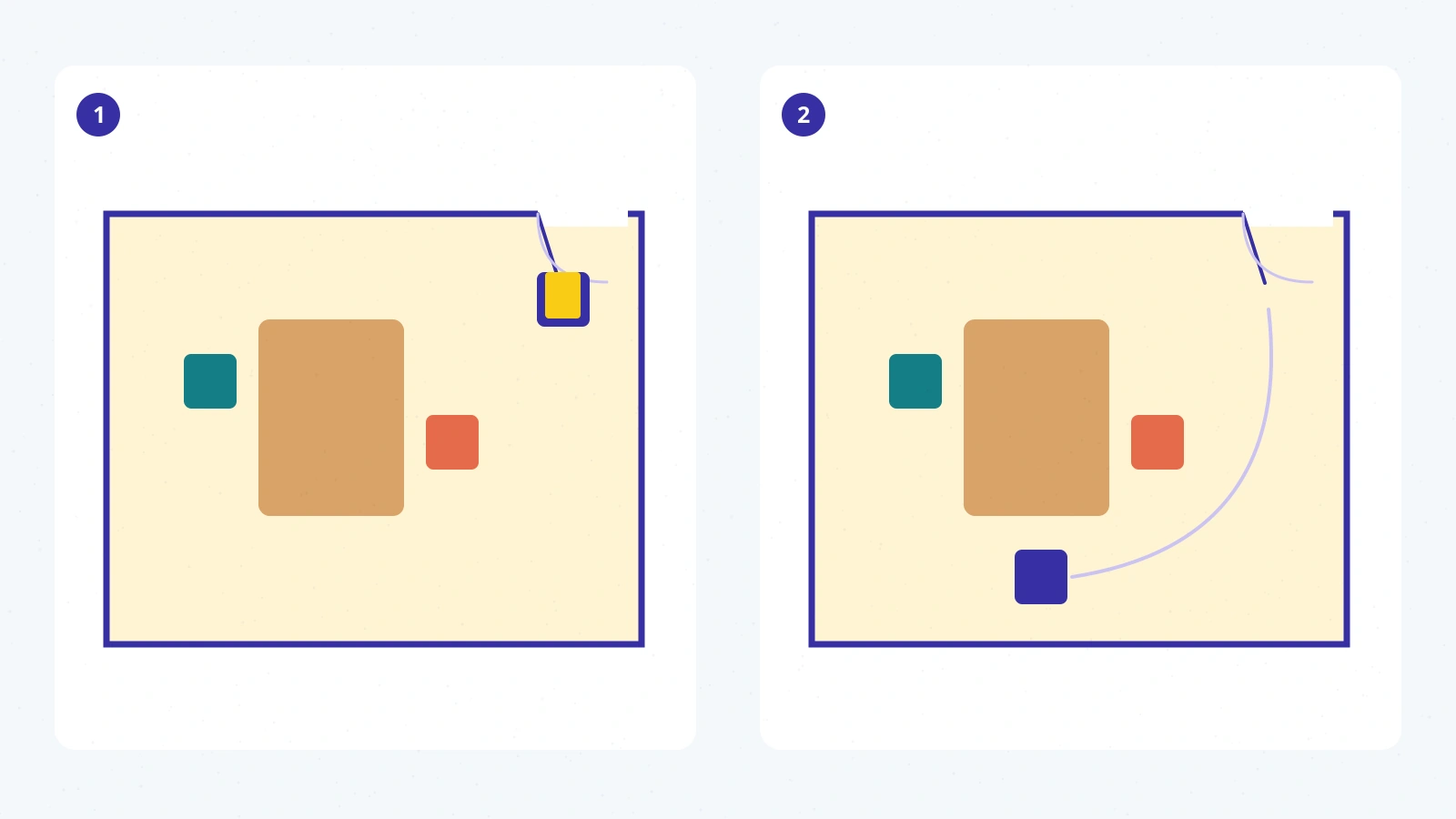
Suppose the invented room appears again. This time, the spare chair has been pulled up to the table. The coat is gone. We might not have consciously catalogued either object before, yet the changed arrangement can invite a new reading of the space.
This is an exercise in comparison, not an account of a real film. It shows why continuity and variation can be more revealing than an isolated frame. Something becomes important because it has been retained, moved, removed, or newly made visible.
Not every change is meaningful in the same way. A different camera angle may reveal an object that was there all along. A scene may omit part of a room for practical reasons. Before announcing a deliberate visual message, distinguish a visible difference from evidence about why that difference exists.
Interviews and production records can sometimes establish the latter. Where they do not, an interpretation can still be worthwhile if it is presented as an interpretation.
Give the background one attentive viewing
Choose a scene you already know well enough that its plot will not monopolize your attention. On a later viewing, watch the space around the dialogue. Pick one category: seating, thresholds, surfaces, or the objects characters actually use.
Try describing what you see without immediately explaining it. “The table separates them” is an observation. “The table represents their emotional distance” is an interpretation that needs the scene around it. The second can grow from the first, but they should not be mistaken for the same statement.
Do not feel obliged to turn every film into an examination. The point is to recover a kind of pleasure that familiar viewing can hide: noticing how much of an encounter has been arranged before the first line lands.
A thoughtfully made room does not have to announce its meaning. It offers positions, textures, distances, and possibilities. The actors enter, and those possibilities become a scene. By then, the room has already begun its part of the conversation.