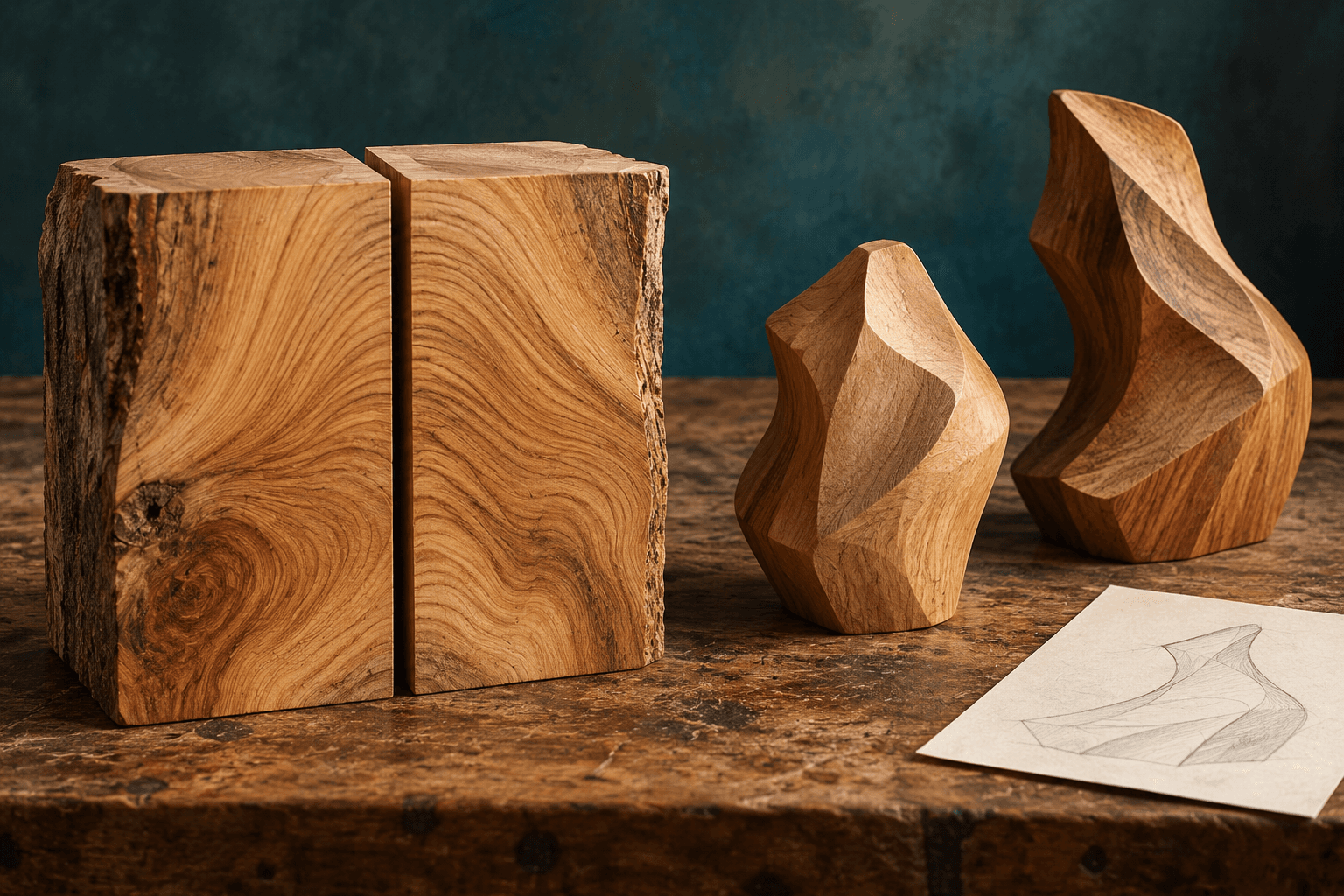
A wooden puppet cannot always follow its drawing. In Hobonichi’s 2023 Japanese interview about the HIDARI pilot, TECARAT’s Takeshi Yashiro and Yoshihiro Nose described a design changing as it became a carving. Yashiro explained that grain influences how the wood splits and yields to a tool. Working with those properties could produce a slight distortion that belonged to the material.
Clay models helped establish a direction, he said, but the details needed to be resolved in wood. Adding material to a clay shape and removing it from a block were different tasks.
That account gives the pleasure of a handmade object a practical complication. The material contributes possibilities that a drawing cannot fully settle. A maker must decide which departures help the figure and which undermine it. The finished surface records an encounter between a proposal and a substance with its own behaviour. Choosing wood begins that encounter; it does not finish the design.
What the surface is allowed to say
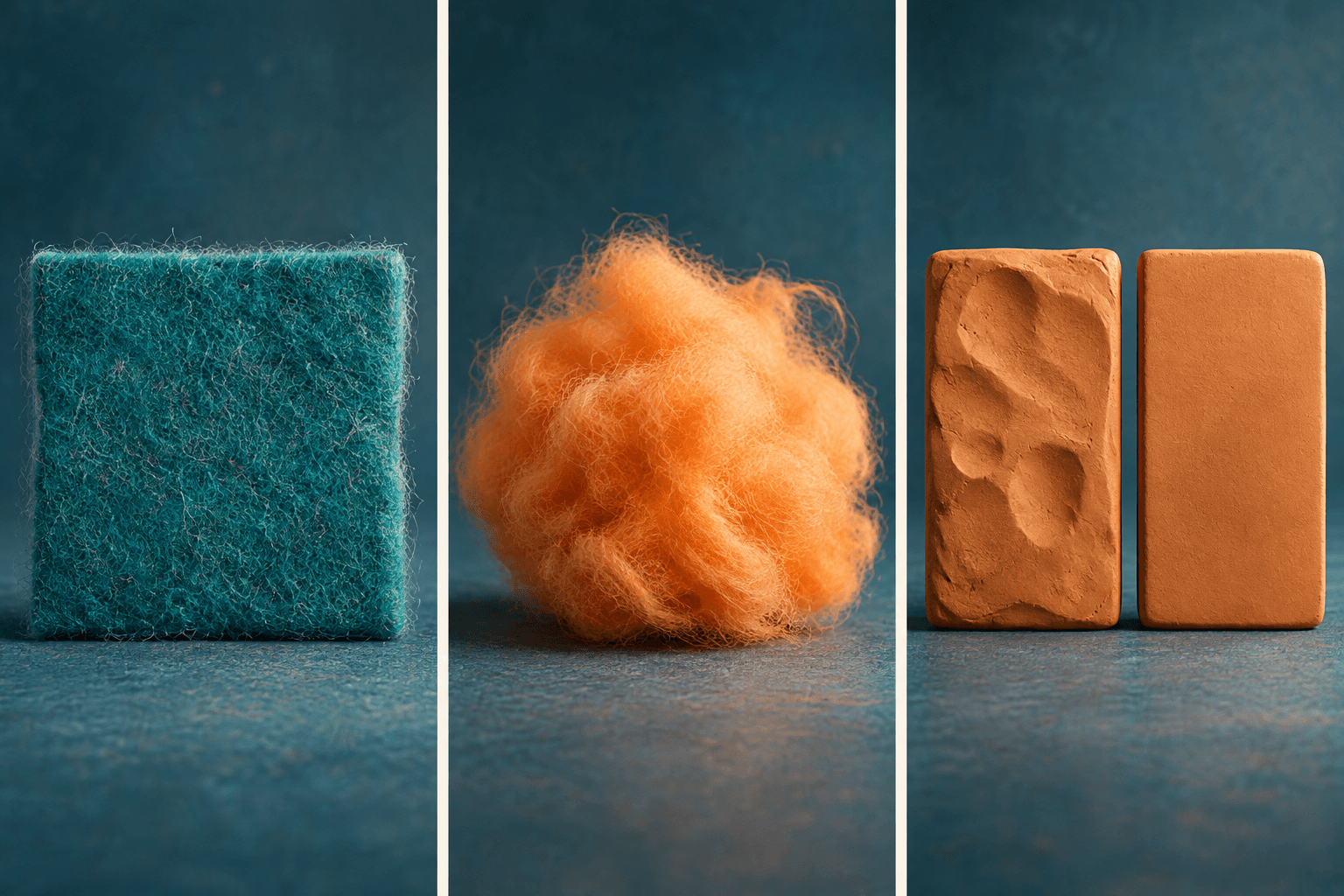
For the 2021 series PUI PUI Molcar, director Tomoki Misato connected wool felt with soft expressions and distinctive movement in a Japanese interview at Musashino Art University. The page also identifies orange cotton as the material used for vehicle smoke in episode six. The puppet and the effect each draw on a familiar substance.
The cotton example invites a useful way of thinking about an animated world. An effect can stand for something without concealing the object used to make it. The choice gives the viewer a proposed relationship: this material can be read as that phenomenon. Its usefulness depends on the surrounding visual language. A bag of cotton does not supply a finished effect any more than a block of wood supplies a finished actor.
Nick Park describes a deliberate wish to retain material evidence. In Netflix’s English account of his work on Wallace & Gromit, he says the team discourages excessive smoothing because “we want to show the clay”. That is his aesthetic preference, rather than a requirement for every stop-motion production.
A trace of handling can therefore be something the maker elects to keep. It is still a choice about the image. A visible mark might help a surface feel worked; another change might distract from a gesture or interrupt the impression of a continuous character. Appreciating the material means asking what a particular trace contributes. The handmade appearance is subject to judgment, just as a polished appearance is.
A room needs weather
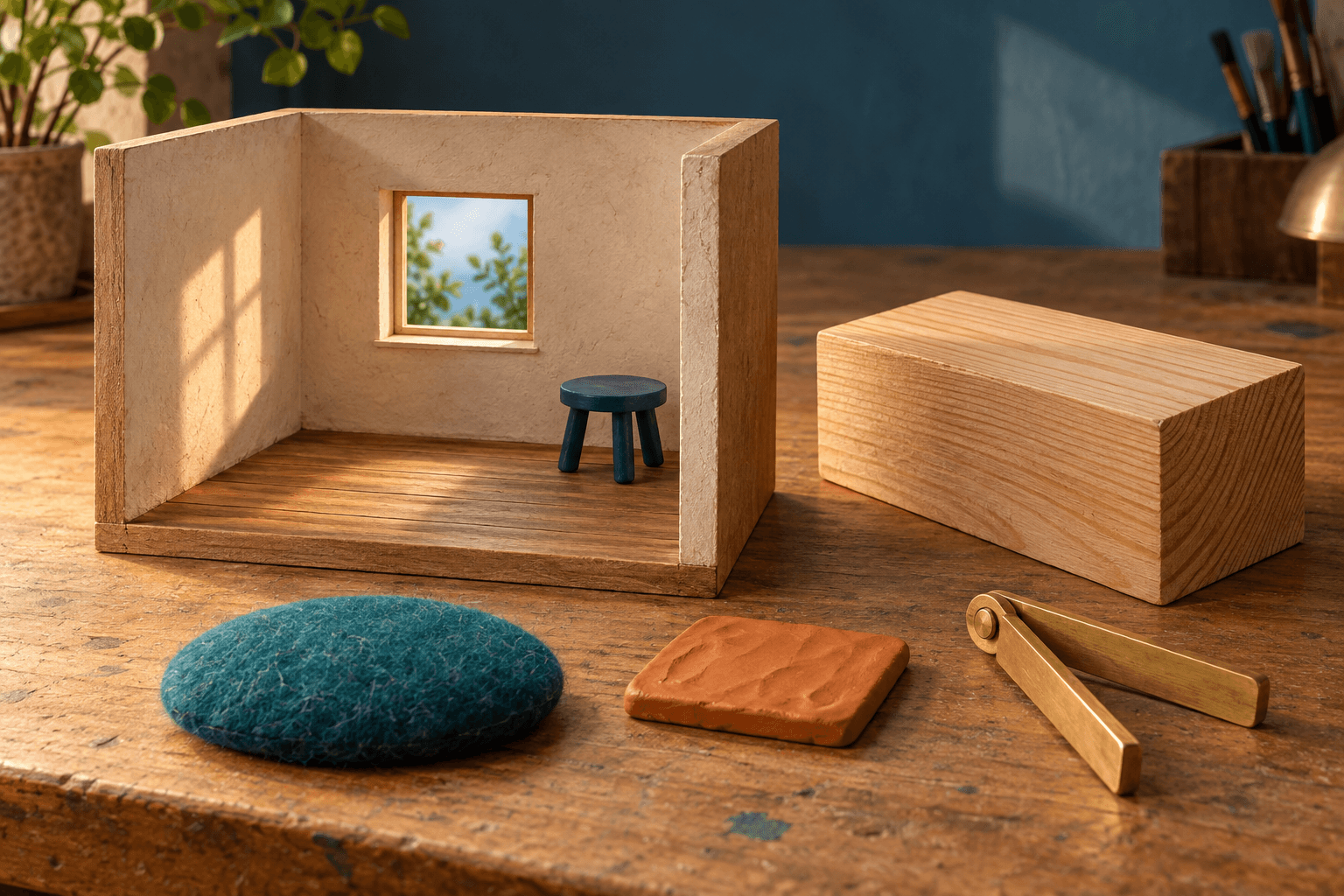
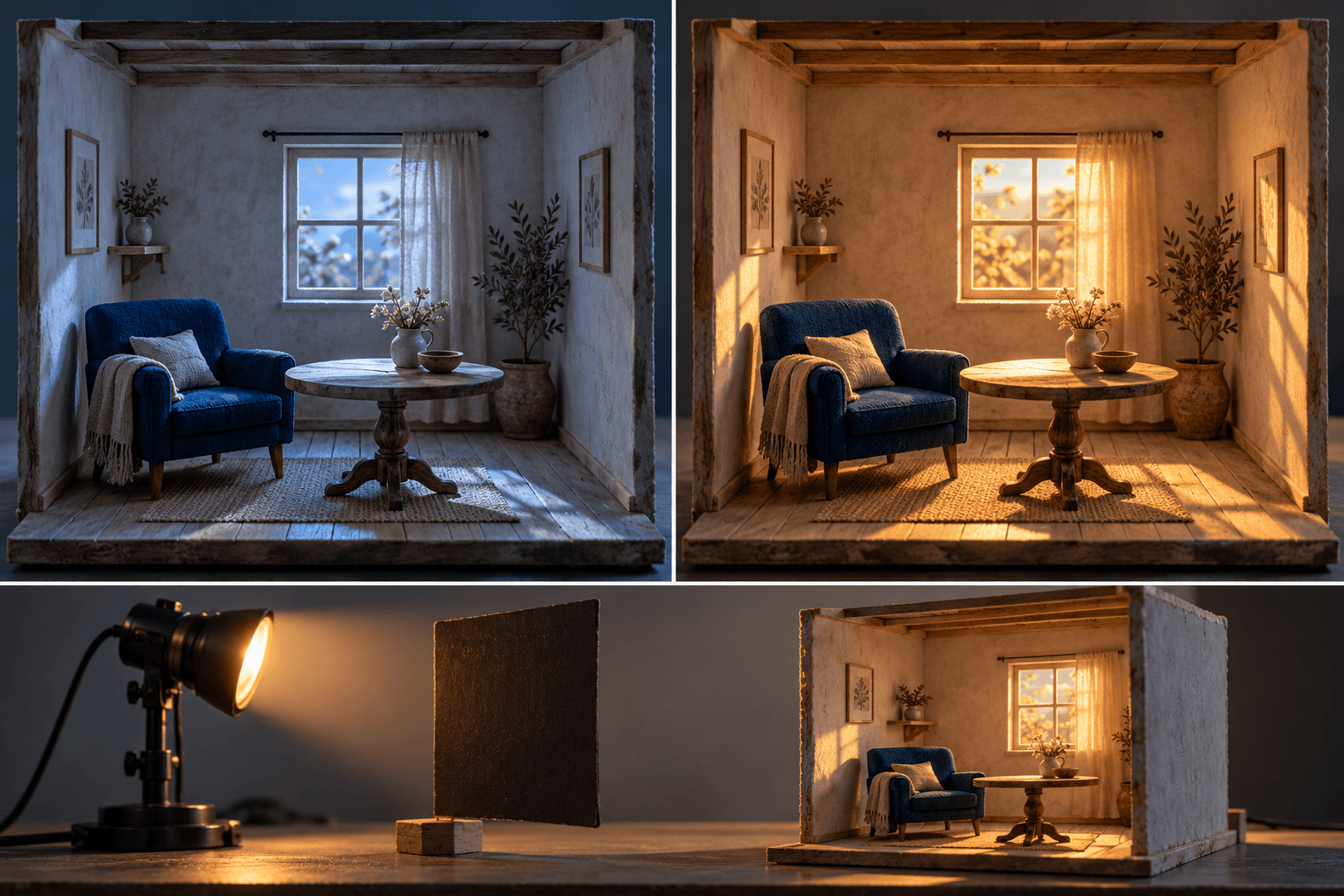
A physical room also needs decisions about the world beyond it. Discussing Rilakkuma and Kaoru in a Japanese director interview with Netorabo, Masahito Kobayashi said the team carefully constructed light with Japan’s four seasons in mind. He also described establishing details of Kaoru’s work and daily life before determining her form, with the aim of making the characters seem present in an ordinary town.
The miniature’s existence does not settle what kind of place the camera will offer. The same invented room could suggest a cold morning or a lingering afternoon through the light reaching its window. That is an explanatory possibility, not a description of a particular shot in the series. It helps show why a set’s walls and furniture are only part of the work of giving a place time, weather and a life outside the frame.
Production designer Curt Enderle makes the scope of those decisions concrete in Netflix’s English craft interviews for Guillermo del Toro’s Pinocchio. He asks what colour the dirt should be, what grows in it, what buildings are made of and what condition they are in. Even apparently incidental surroundings require a proposal.
An aged surface is consequently an account of a place, not simply an extra layer of detail. Wear asks the designer to consider where use occurred and what remains visible. The appeal of a small object can encourage us to examine it closely; that scrutiny gives its choices more significance. The room must support the same imagined life as the figure inhabiting it.
The actor has to be adjustable
In the same Pinocchio interviews, Georgina Hayns identifies her role as director of character fabrication. She describes a workshop continually adapting puppets for individual shots: adding a joint when an arm needs greater reach, or changing neck and wrist tension for an animator’s needs. The image of a completed puppet can hide this continuing work. A figure’s build still has to serve the action asked of it.
Here the material’s resistance calls for intervention. An arm with an appealing surface is insufficient if it cannot make the required gesture. A repair or adjustment can preserve the performance by changing the object that produces it. That places engineering inside the discussion of craft. The useful question is what an actor needs to do, as well as how convincingly its surface suggests a body.
Consistency creates another demand. Kobayashi said chief animator Hirokazu Minegishi made reference animations of characteristic movements before the Rilakkuma and Kaoru team began shooting across ten units. The other animators learned those movements, though keeping the whole production consistent still required trial and error. A shared character needed something more specific than a shared puppet design.
The HIDARI makers encountered a related problem in wood. Yashiro described making two heads in preparation for possible parallel shooting. Dividing one piece of wood gave the parts similar grain, quality and distortion. He could still distinguish them on close inspection, but said he could not tell them apart in the filmed image. This was a 2023 pilot-development account, not proof of a completed feature.
The wood’s variation and the need for a consistent character coexist in that example. A material can help define the figure while also creating differences that the team must manage. The camera supplies a particular test: two objects need not be identical in every respect to sustain the same screen identity. The maker has to know which differences the image will expose.
Extending the world beyond the workbench
The physical vocabulary can guide a digital component too. In fxguide’s English interviews about Kubo and the Two Strings, LAIKA visual-effects supervisor Steve Emerson explained that the opening water would require a computer-generated solution. Water-effects lead David Horsley described combining wood-grain textures with procedural patterns. The account identifies cut-paper references for water churn and attention to making simulated water behave around the photographed puppets at the intended scale.
Emerson linked the task of making effects belong to the stop-motion environment with collaboration. The handmade world could give the water a set of visual conditions to meet. Grain, pattern, scale and movement mattered as relationships among components, even when those components were produced through different processes.

These accounts make craft visible as a sequence of judgments. One maker follows grain; another retains a mark, constructs a season, alters a joint or establishes a common gesture. Their decisions concern what the camera should reveal and what the performance needs to sustain. A material gives the work a starting character. The world becomes specific through what its makers do with that invitation.