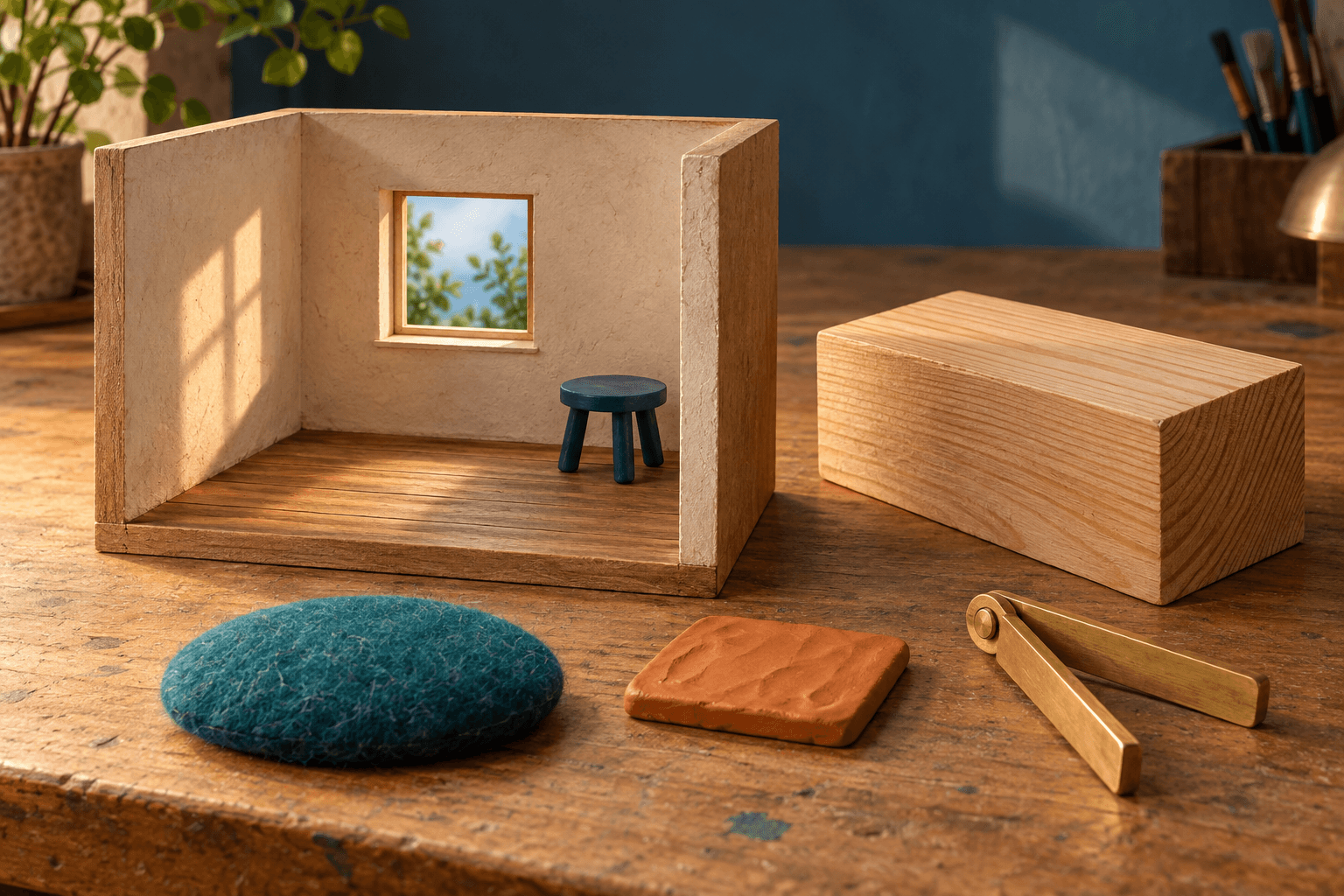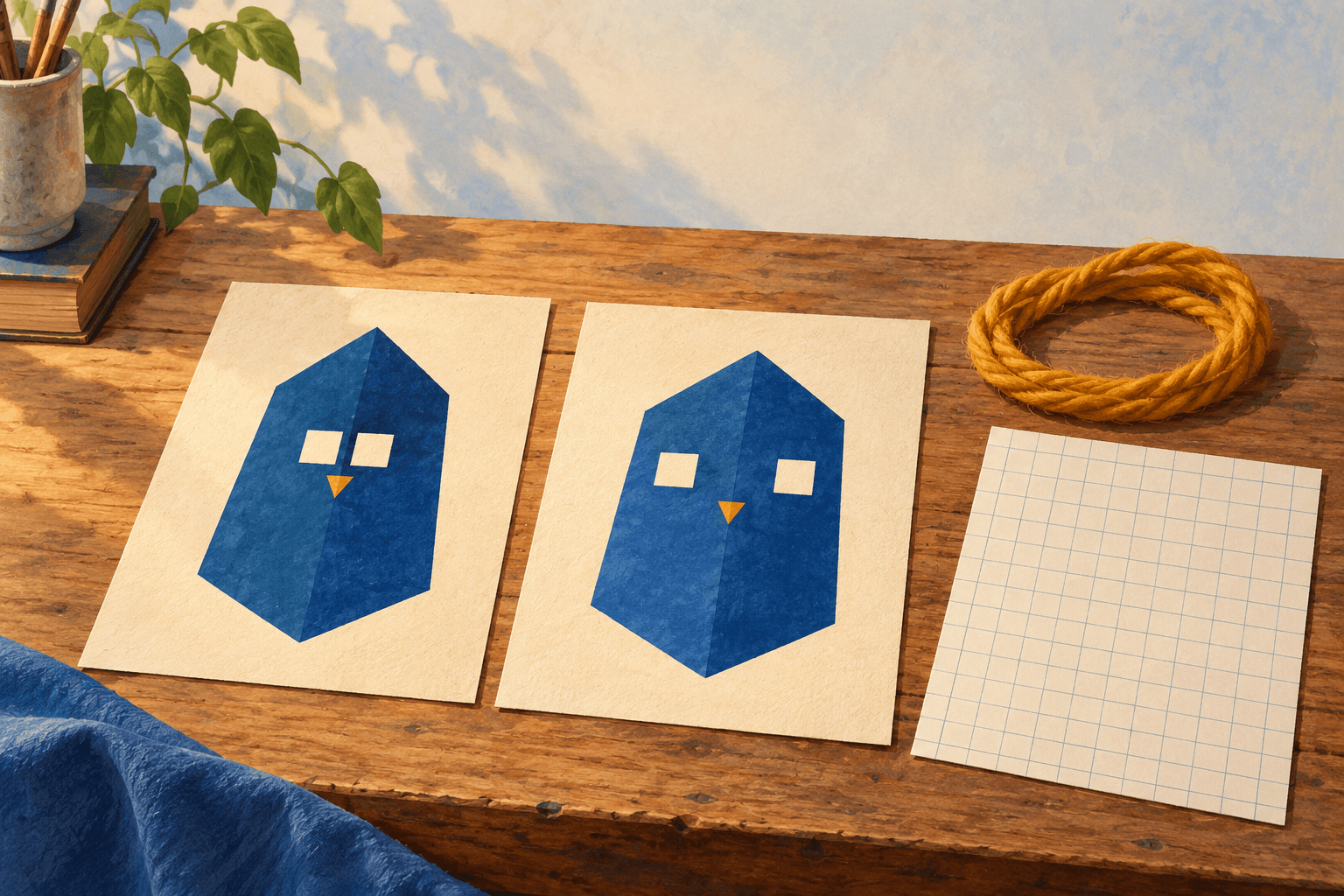
In Nintendo’s Japanese interview about Kirby’s Epic Yarn, HAL Laboratory’s Yamamoto recalled roughly three months of work on Kirby’s design. Eyes and mouth needed their proportions settled through repeated exchanges of drawings.
Good-Feel’s director Sei learned to see differences he had missed. Yamamoto accepted the subsequent motion. Their exchange suggests that familiar recognition had to become a shared working judgment.
There is a useful distinction here between recognising Kirby and deciding whether a new Kirby looks right. The first can happen at a glance. The second asks which relationships have to survive a change of material or viewpoint. Adding detail is no automatic remedy: an extra mark can leave the essential arrangement just as unsettled. A sparse design gives its few surviving features considerable work to do.
A face measured in pixels
An earlier Nintendo-published English interview, from 2007, connects the body to actions and constraints. Kakuta recalled a roughly 16-by-16-pixel character sprite on the Game Boy. The character needed to swallow enemies and inflate to fly within that small space. In his account, the requirements of the game helped produce the shape, rather than the team starting with a cute figure and finding a game for it.
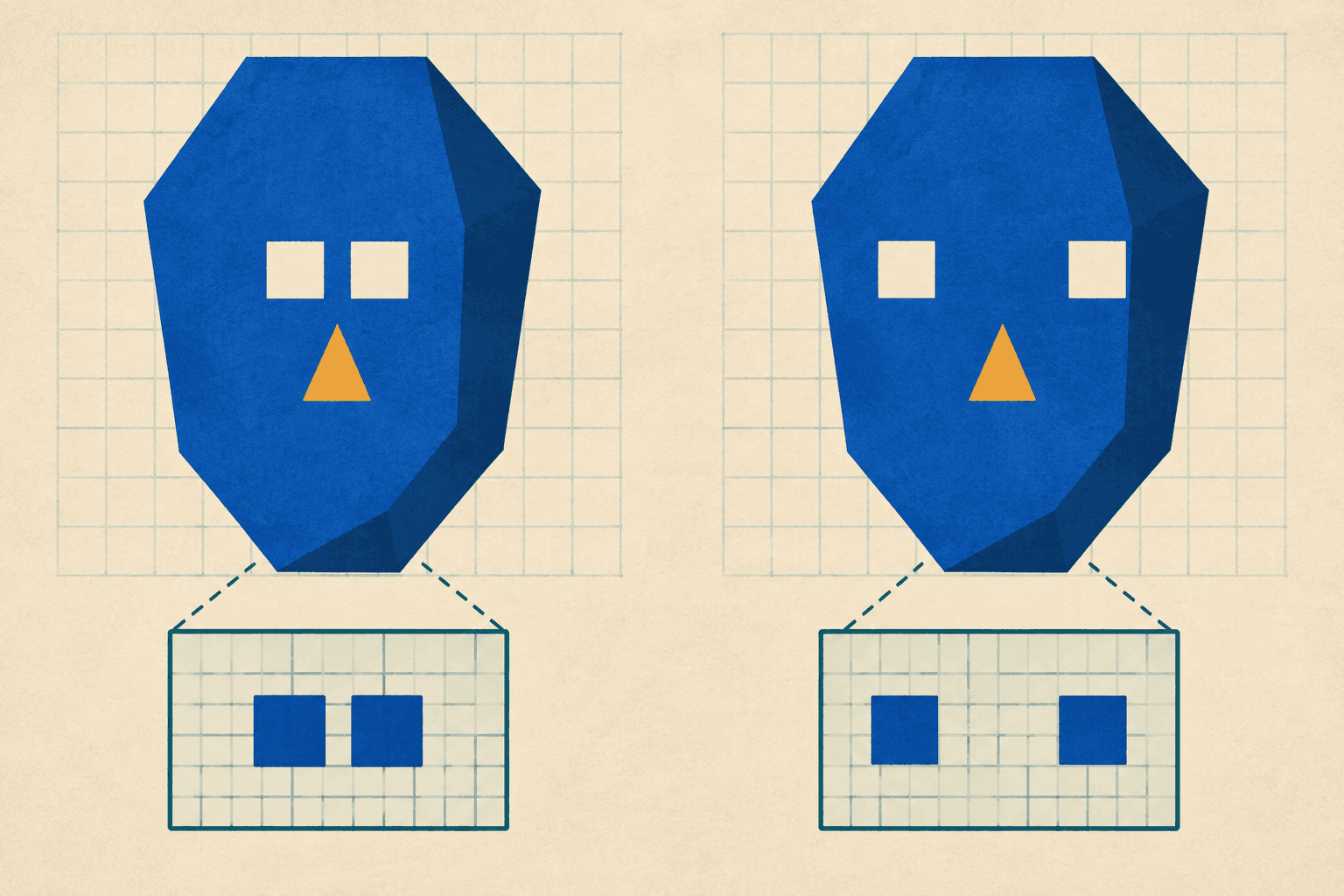
Kakuta also recalled a Game Boy-era drawing rule: one pixel between the eyes. Two produced a different face. That is a recollection about a particular small drawing, not a specification for every later model. Still, it makes the importance of proportion unusually concrete. The difference is easy to count; whether the result feels like the character is another judgment.
Few elements do not mean few possible mistakes. Move the eyes without changing their size and the expression may shift; keep the outline while changing the interior arrangement and the outline alone cannot settle the result. The interesting unit is the relationship between features. A drawing can retain all its named parts and still fail to retain their effect.
Thread changes the task
The yarn project preceded Kirby. In the first chapter of the interview, Good-Feel’s Kono described proposal images made from photographs of purchased fabric, and staff handling yarn while developing ideas.
In the following chapter, Kono connected the original character’s simplicity to shaping one strand. Producer Ebisu recalled mixed feelings about Nintendo’s Kirby proposal, then surprise at Kirby’s presence in thread.
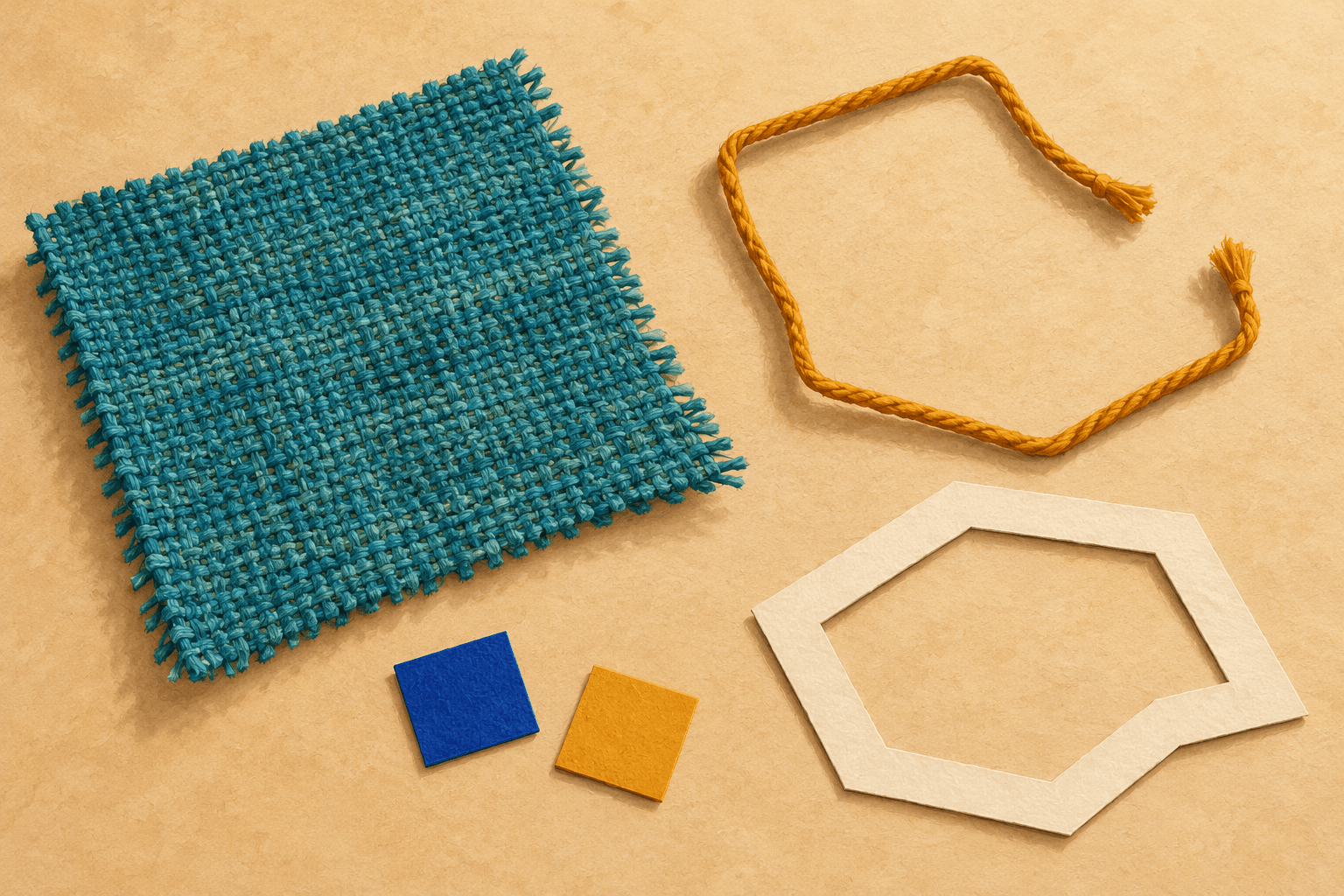
A thread outline asks the viewer to accept something quite different from a filled body. Empty space can occupy the centre, yet the figure still has to be understood as someone who acts. Material novelty and character continuity pull on the same drawing. The earlier three-month exchange matters because an appealing new treatment does not answer every question about the figure inhabiting it. The small relationships still need attention.
Consider the difference between choosing a material and deciding what that material must preserve. Thread offers a line that can bend, gather or open into a loop. Those possibilities invite invention, but they also require choices about how a face belongs to the line. It is easy to describe the idea as a character made of yarn. That description leaves the essential editorial question unanswered: which arrangements make this particular treatment convincing? The appeal of the concept and the precision of the result are separate achievements.
What happens when the face turns away
Discussing Kirby and the Forgotten Land in Nintendo’s 2022 Japanese developer interview, director Tatsuya Kamiyama said Kirby’s round body made his facing direction difficult to read from behind.
A recognisable back is not necessarily an informative back. Identifying the figure does not tell you where an attack will go. That changes what “getting the design right” can mean: a character has to remain legible while the player is occupied with a destination or an enemy. The face is only one of the places where understanding happens.
In the second chapter, Kamiyama described attacks counting as hits when they appeared to connect from the player’s viewpoint, even without a literal meeting in 3D.
He also described a near-ground jump input counting as landed, preventing an unintended hover. The interview gives neither adjustment a public algorithm or numerical threshold.
Here the visual reading has consequences. The game can accommodate what the player thinks happened, instead of requiring a better estimate of depth. Preserving an approachable character involves decisions beyond his visible surface. A carefully proportioned face would offer little consolation if the action repeatedly contradicted the player’s view of it.
An intelligible image and an intelligible action pose different questions. The image asks whether the parts belong together; the action asks whether the player can form a useful expectation about what comes next. An ordinary outline can satisfy the first while leaving the second uncertain. The camera belongs in that discussion even when it adds no visible feature to the character.
These adjustments identify misunderstandings the team tried to accommodate. They do not quantify how often those misunderstandings occurred or establish that every player found the result comfortable. The specific decisions, rather than a universal promise of ease, are the useful evidence.
A body allowed to become strange
In the third chapter, Nintendo’s Kei Ninomiya described Mouthful Mode: Kirby cannot completely swallow an object, takes its shape and continues acting.
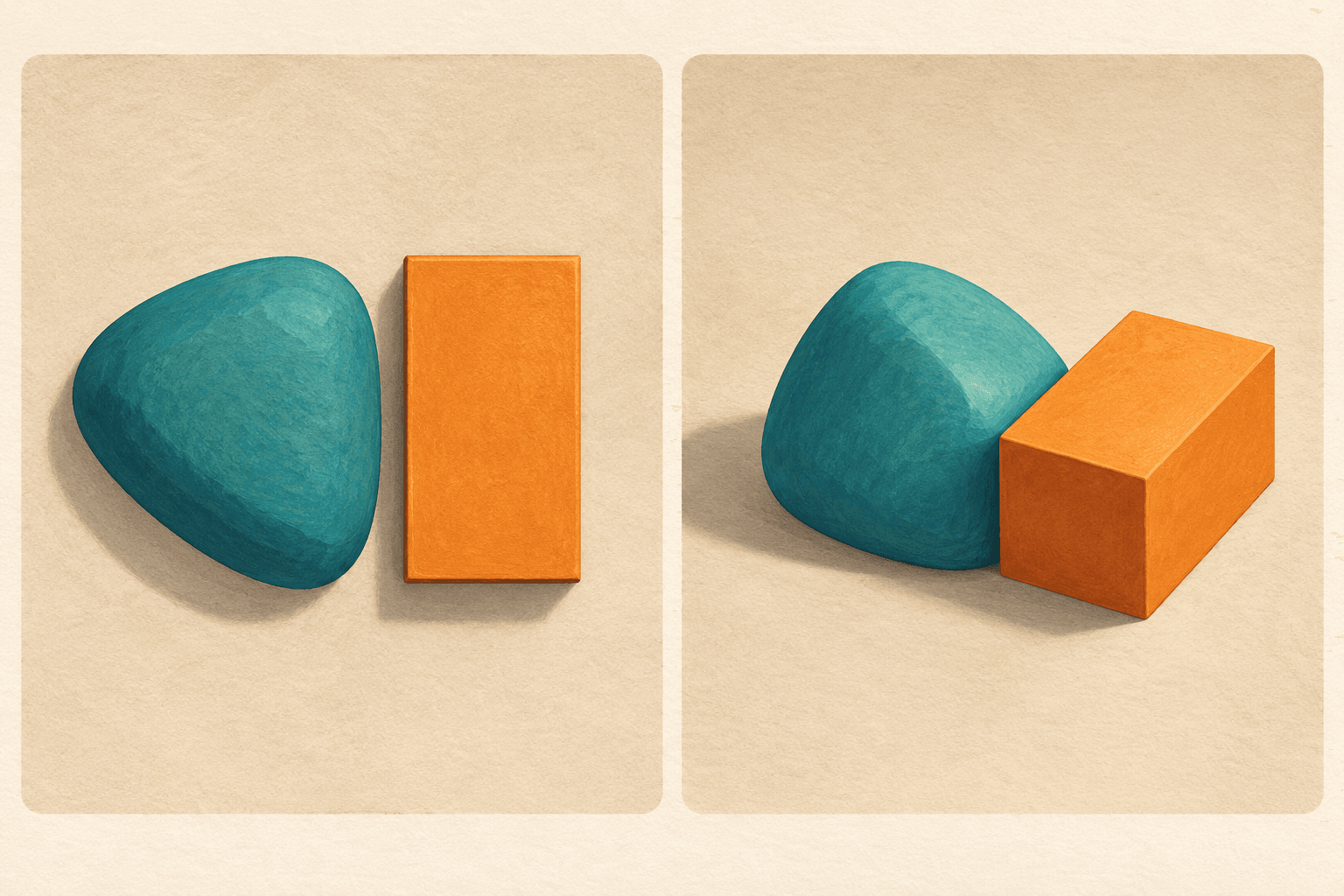
This is a different kind of continuity from keeping a contour unchanged. A distortion can remain intelligible because it has a cause. The body is responding to something, and that response becomes part of the action. The design question shifts from how much alteration is permitted to how clearly an alteration can be understood. A strange shape can tell the viewer more than an undisturbed sphere seen from an unhelpful angle.
Read beside the rear-view problem, that explanation complicates the idea that recognisability depends on protecting one outline. A deformation can communicate a relationship between body and object. An unchanged back can withhold a relationship between body and direction. The amount of change is consequently a poor measure of how clear the result will be. What matters is what the shape allows the viewer or player to understand.
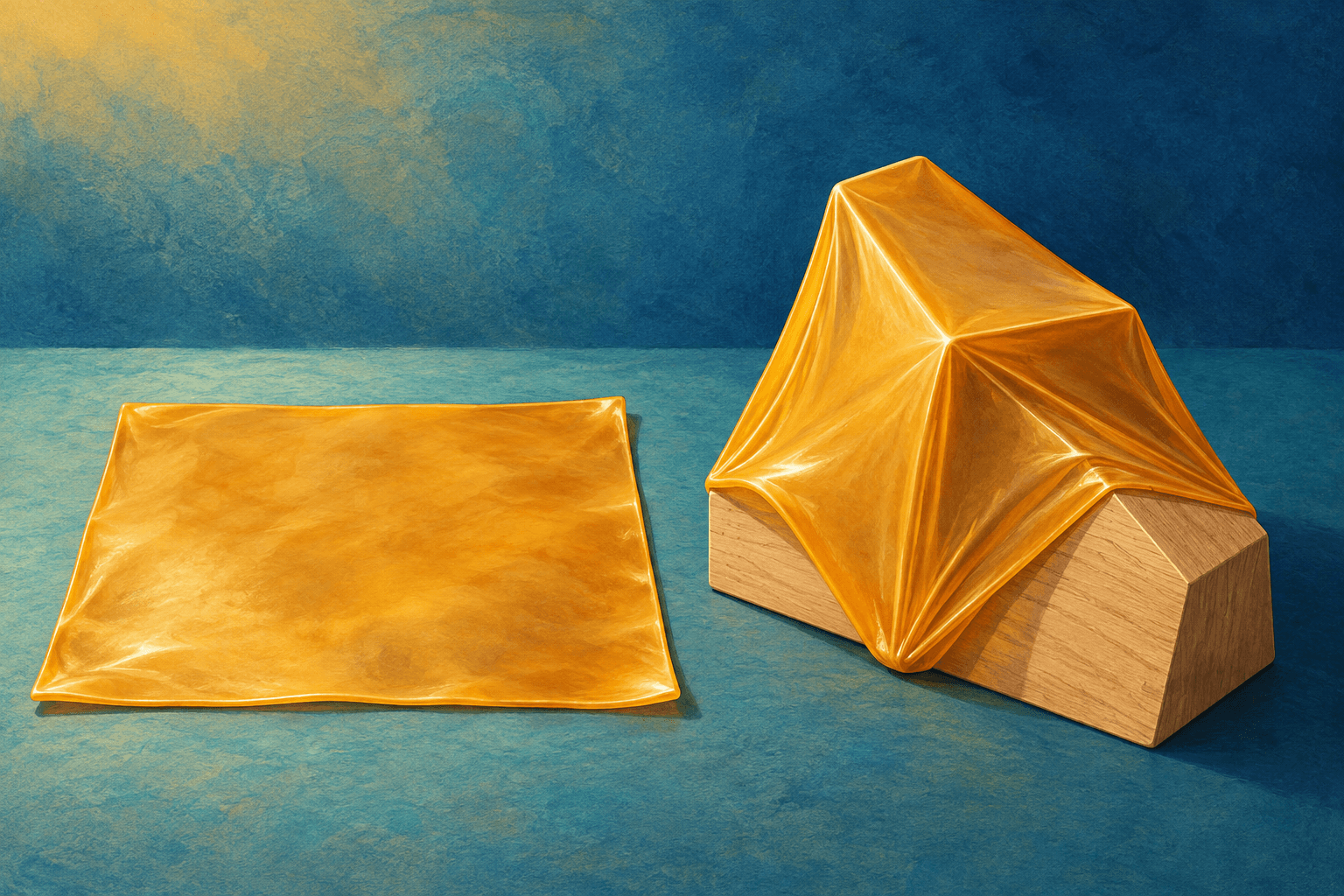
The thread proposal, the rear view and the object-filled body set different tasks for the same basic design. None asks merely for more detail. One asks a familiar figure to inhabit a new material; another asks a player to read direction; another makes deformation an action in itself. The work lies in deciding which relationships matter for the particular task. That is what makes the early exchange over eyes and mouth so revealing: the collaborators were learning what to notice, preparing themselves for the next drawing and the next movement.