A town can occupy a small map and still suggest lives extending beyond it. A reused wall, an altered sign or a resident’s appointment can imply something the picture does not show: a building’s former purpose, another customer, a tomorrow. The interesting question is how a limited collection of images gains those possibilities.
These ten details draw on artists’ and developers’ published accounts, together with official feature descriptions. They concern different kinds of work, from constructing an alphabet to deciding what happens after sunset. Read together, they suggest that a convincing town depends on relationships between things as much as the amount of detail inside each thing.
1. A small kit that makes different buildings
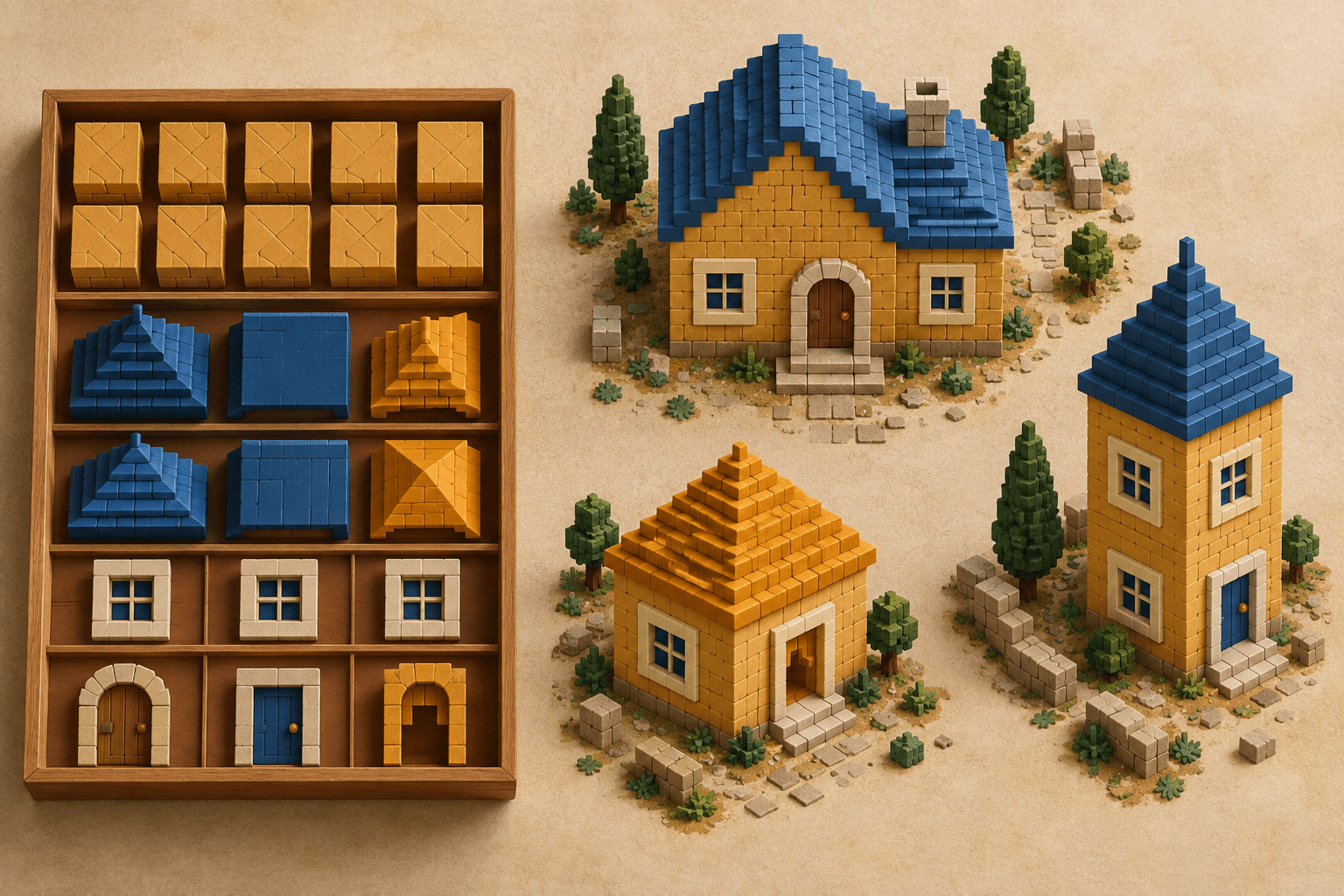
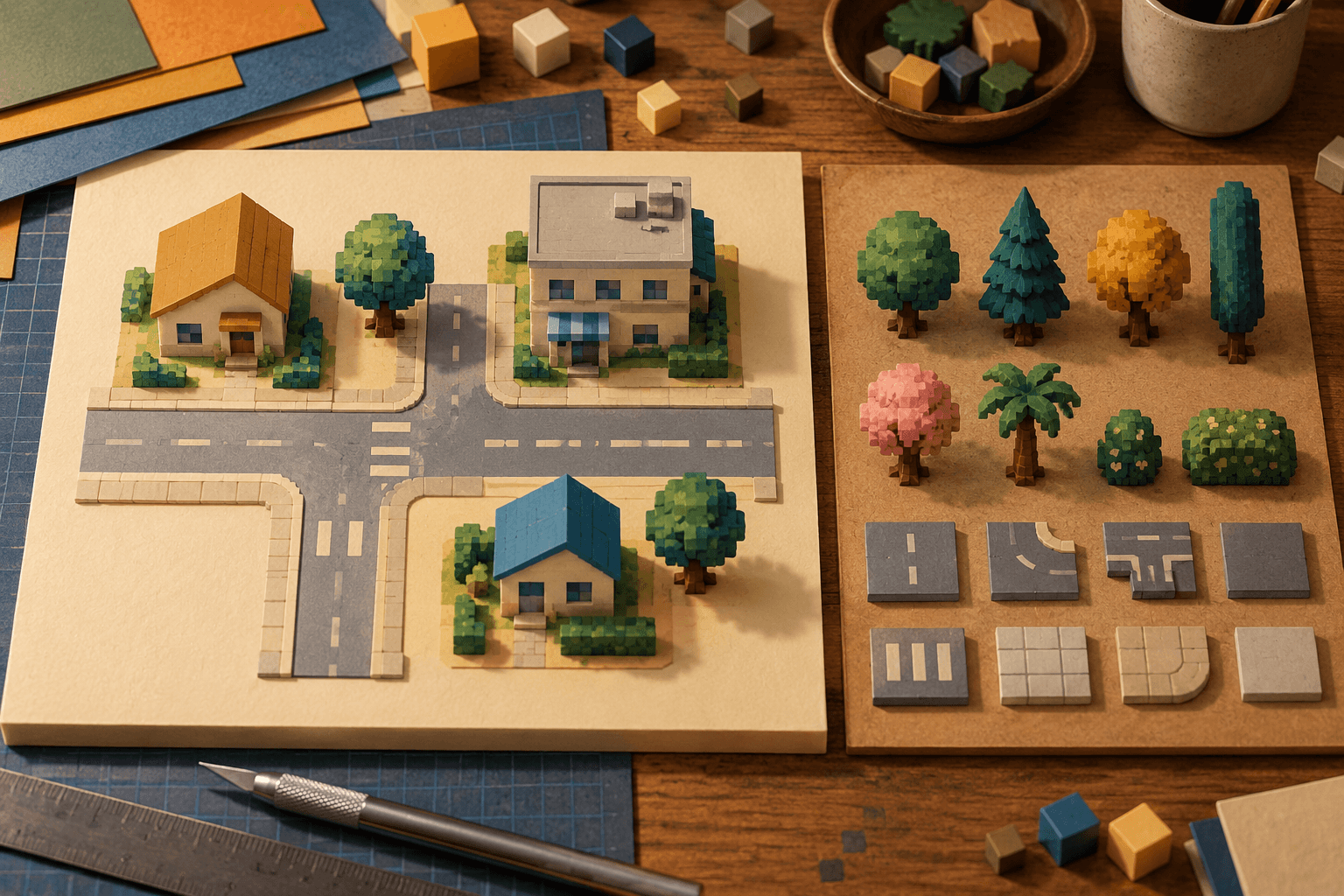
In a Japanese retrospective, MOTHER2 art director Koichi Oyama describes capacity constraints that required reuse. Small 8×8-pixel units could be combined into different images. Oyama’s account
A kit makes sameness useful. Repeat a wall component, then change the doorway, roof or arrangement around it, and the repeated piece becomes part of a neighbourhood’s common vocabulary. The important distinction is between repeating a component and repeating an entire composition. One saves material while leaving room for different buildings; the other risks making each address interchangeable.
For a reader of the image, a repeated element can also provide a comparison. A strange entrance is easier to notice beside familiar walls. Constraint becomes an organising principle: difference has somewhere to register because the background establishes what is ordinary.
2. Letters that do double duty
Oyama gives a particularly concrete example: HOTEL and HOSPITAL signs shared letters, with missing ones added as needed. This conserved capacity rather than requiring an independently drawn alphabet for every sign. The sign example
Letters do different work from wall tiles. They tell us what a building is for. Two façades might use related shapes while their signs promise entirely different activities. Reusing the lettering therefore makes a limited visual resource carry a second layer of information: a shared appearance, separate purposes.
That is a useful way to think about a street’s identity. A town need not give every shop its own spectacular graphic treatment. A few readable distinctions can make a row of similar structures intelligible. The sign does not have to describe the whole interior; it gives the viewer a reason to imagine one.

3. Realism that leaves things out
Oyama also admits that plants were not selected for ecological consistency and that traffic conventions were not carefully considered. His recollection complicates any claim that MOTHER2’s town graphics faithfully simulate real places. His discussion of realism
This candour is valuable because recognisability and accuracy are different tests. A road can communicate movement without resolving every rule of road engineering. A tree can establish an outdoor setting without proving that the species belongs there. Such shorthand asks the viewer to supply connections between selected marks.
The question becomes which omissions preserve meaning and which undermine it. A missing ecological explanation may matter less to a story than an unclear entrance. That is an interpretive distinction, not evidence that every inconsistency was planned. A town can remain legible while its picture falls well short of a complete model.
4. An object that remembers an earlier use
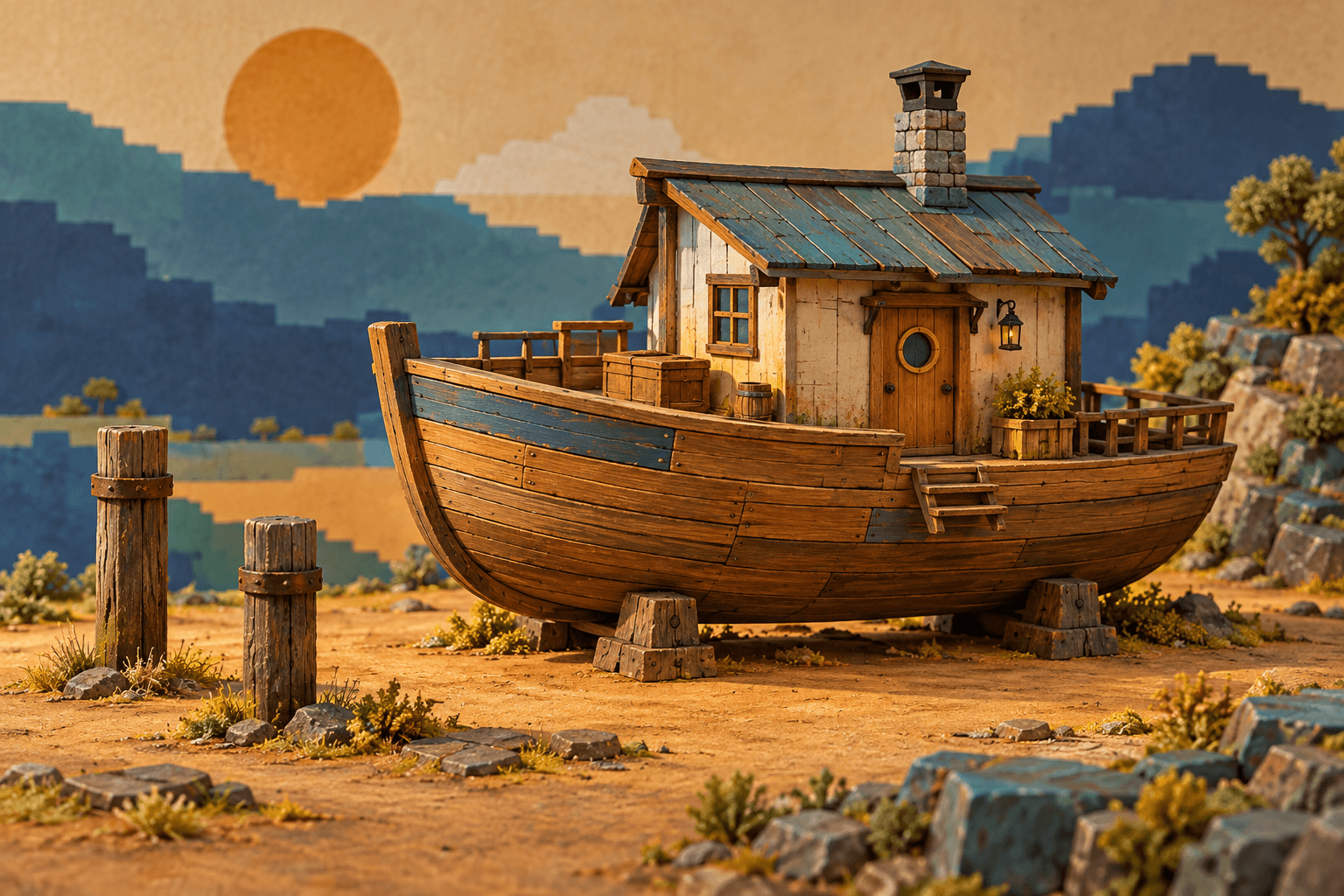
In Nintendo DREAM WEB’s Japanese interview, Eastward lead artist Hong Moran connects boat homes to memories of people living and trading aboard boats. He also explains a fictional former port whose water has disappeared, leaving boats converted into houses. Moran’s explanation
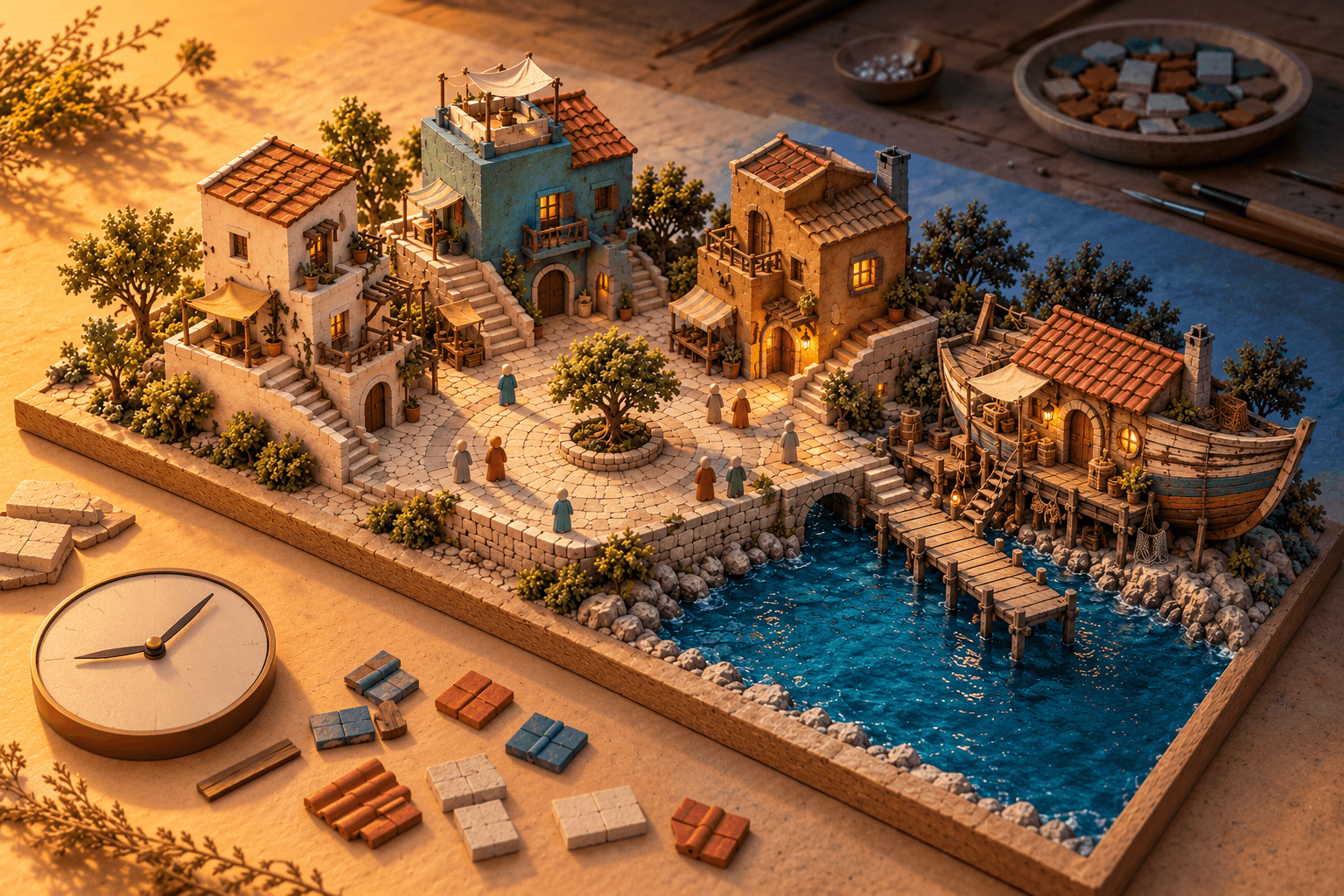
A converted object compresses a history into its shape. A hull used as a house suggests both an earlier activity and a present adaptation. Its meaning comes from the mismatch between what the object was built to do and what someone now needs it to do.
That kind of detail rewards more than recognition. The viewer can ask what changed, what remained useful and who made the adjustment. A spotless purpose-built house chiefly announces its current function. A repurposed one adds another tense. The town acquires a past without every part of that past requiring a separate scene.
5. Signs shaped by an observed city
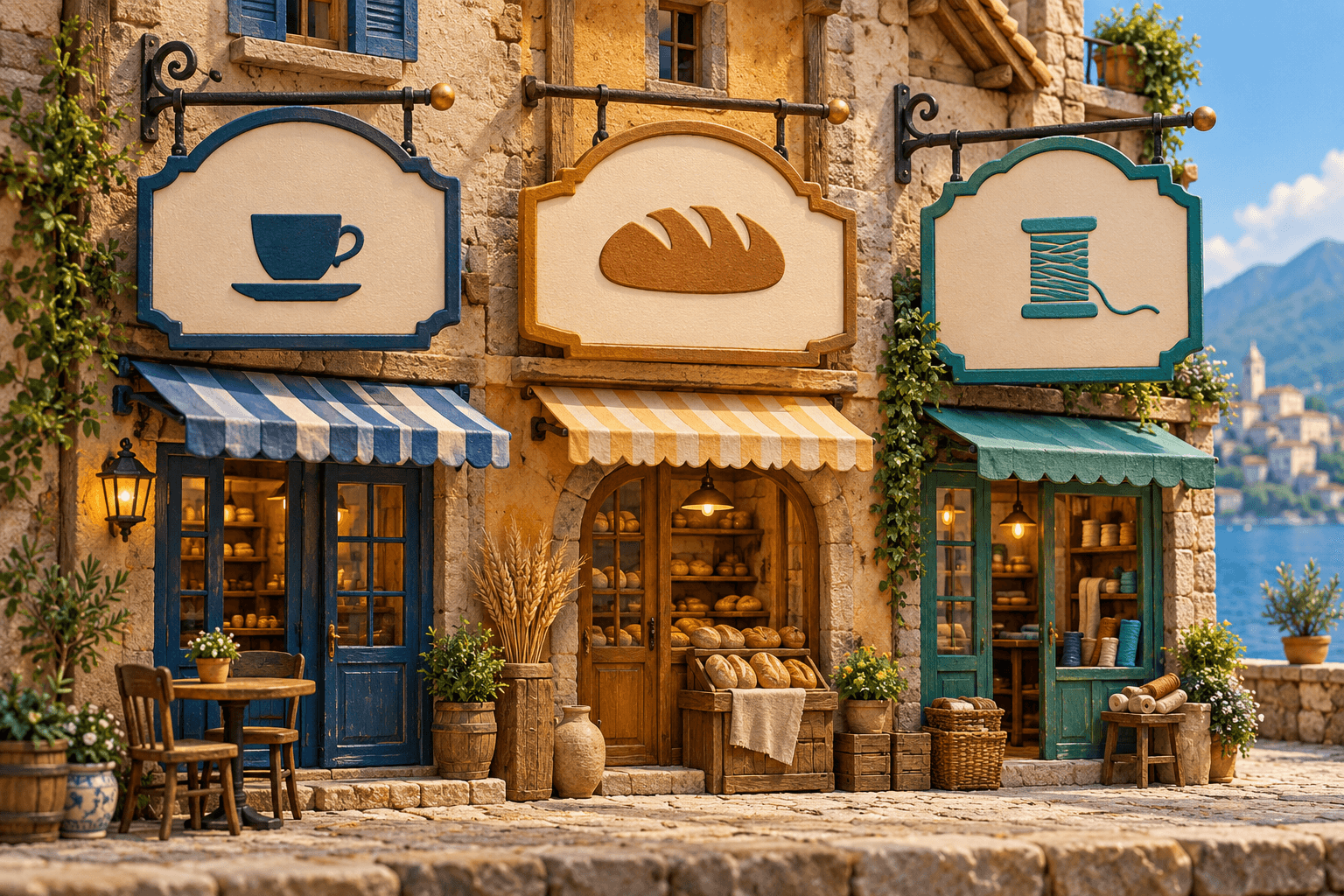
Moran attributes mixed-language signage to walks in Shanghai, where he noticed Chinese, Korean and Japanese signs. The Japanese publication presents this as his observation and inspiration; it does not supply a Chinese-language original. The published interview
The detail introduces another kind of relationship: different people sharing a street. A sign addresses someone. Several languages can imply several audiences, histories or businesses using the same public surface. The design question is therefore larger than how many marks will fit on a board. It includes who might read them.
The distinction matters when interpreting such imagery. Unreadable decorative marks cannot automatically establish cultural specificity. Moran’s account supplies a particular observed reference and a stated creative choice. The broader argument is that a town’s lettering can suggest its social composition, while careful attribution keeps that argument connected to the artist’s experience.
6. Light that changes the meaning of a window
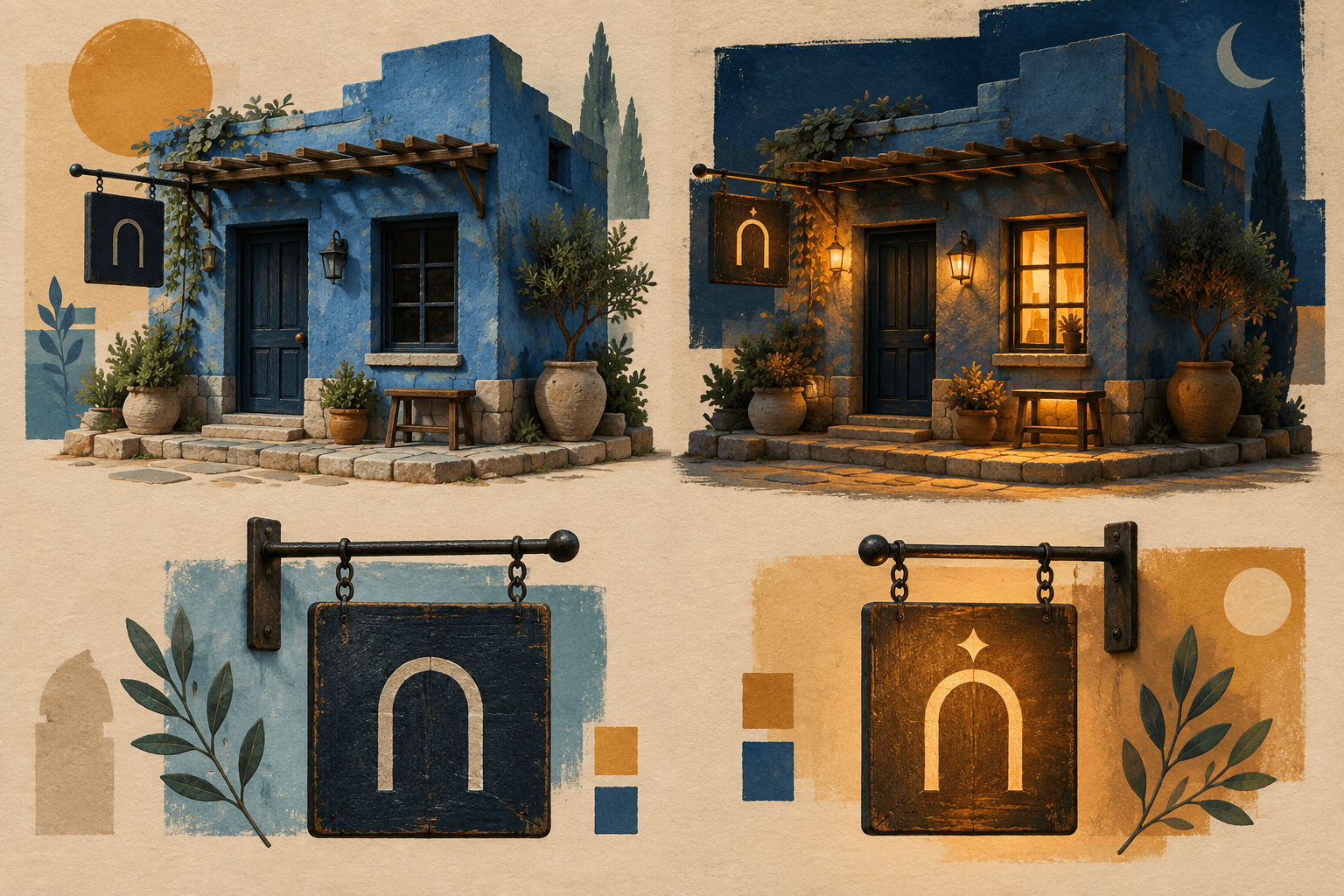
Moran says Eastward’s changes of atmosphere are mostly programmed, including light from windows at night. Some signs have separately redrawn night versions. The account describes a mixed workflow, without exposing engine code. His lighting explanation
A window has a different implication when it emits light. By day it may read chiefly as a piece of the façade; after dark it can suggest activity behind the wall. The building’s outline need not change for its relationship to the viewer to change.
Separating lighting from a sign’s redrawn image also makes the production choice clearer. Some changes concern how existing shapes are illuminated; others concern the shapes themselves. Neither category alone explains the whole scene. The worthwhile question is what each alteration communicates about this particular hour, rather than whether every visible change was painted in the same way.
7. A resident with a timetable
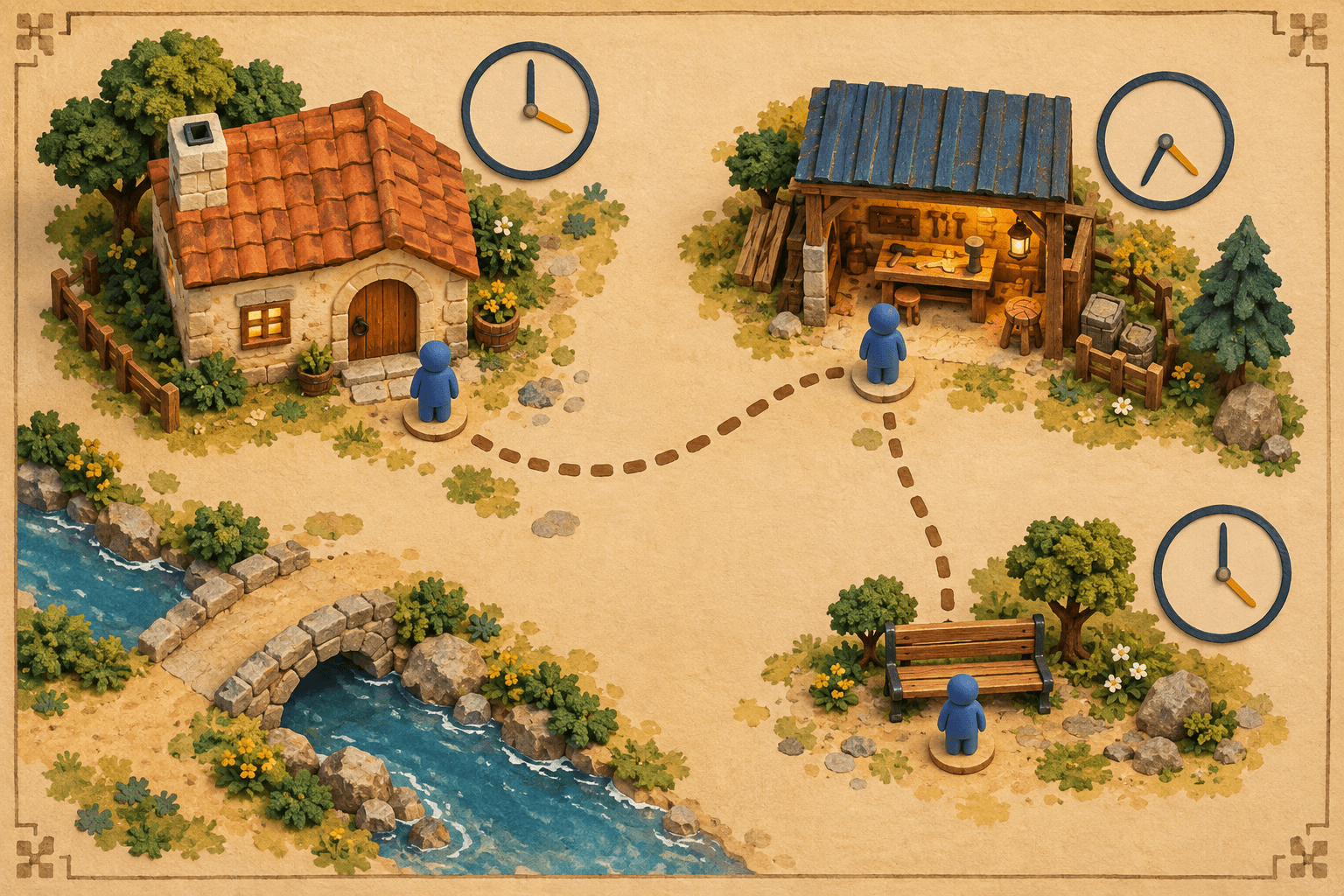
Stardew Valley’s official description gives residents daily schedules, birthdays and changing conversation over the week and year. These are developer-described features, rather than observations from a play session for this article. The official features
A timetable introduces the possibility of missing someone. That absence can be meaningful: the resident has obligations beyond waiting for the visitor. An address and a portrait establish where a person belongs; a routine gives that person a relationship to time.
Repeated encounters can then become comparisons rather than identical transactions. The same place at a different hour may call for a different expectation. A schedule does not require an exhaustive simulation of a life to perform this work. Its smaller promise is continuity: the person’s next appearance can connect to a pattern the player has begun to learn.
8. A calendar the town shares
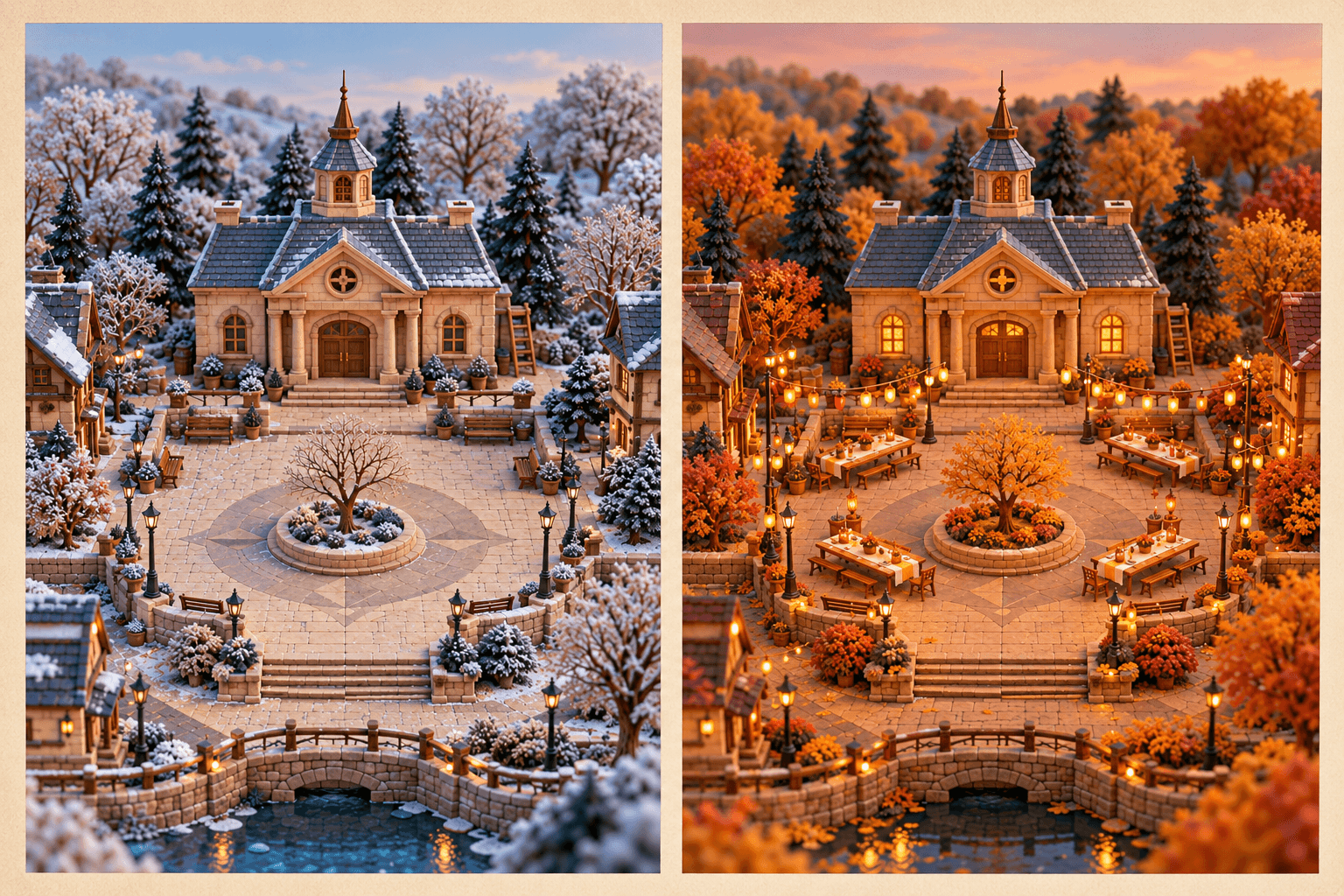
The same official page describes seasonal festivals and the choice between repairing the community centre or backing Joja Corporation. Alongside personal routines, it identifies collective events and decisions about town infrastructure. The community features
A shared calendar differs from an individual timetable. It gives many residents a reason to assemble around the same occasion. A public building adds a more durable question: what should the town retain, repair or replace? Together these details create scales of time beyond the next conversation.
For this argument, the useful distinction is between recurrence and consequence. A festival belongs to a cycle; a decision about infrastructure concerns what will occupy the shared space. Both can make a town matter beyond its role as a service stop. One asks when to return. The other asks what kind of place the return will be to.
9. Another hour that invites another visit
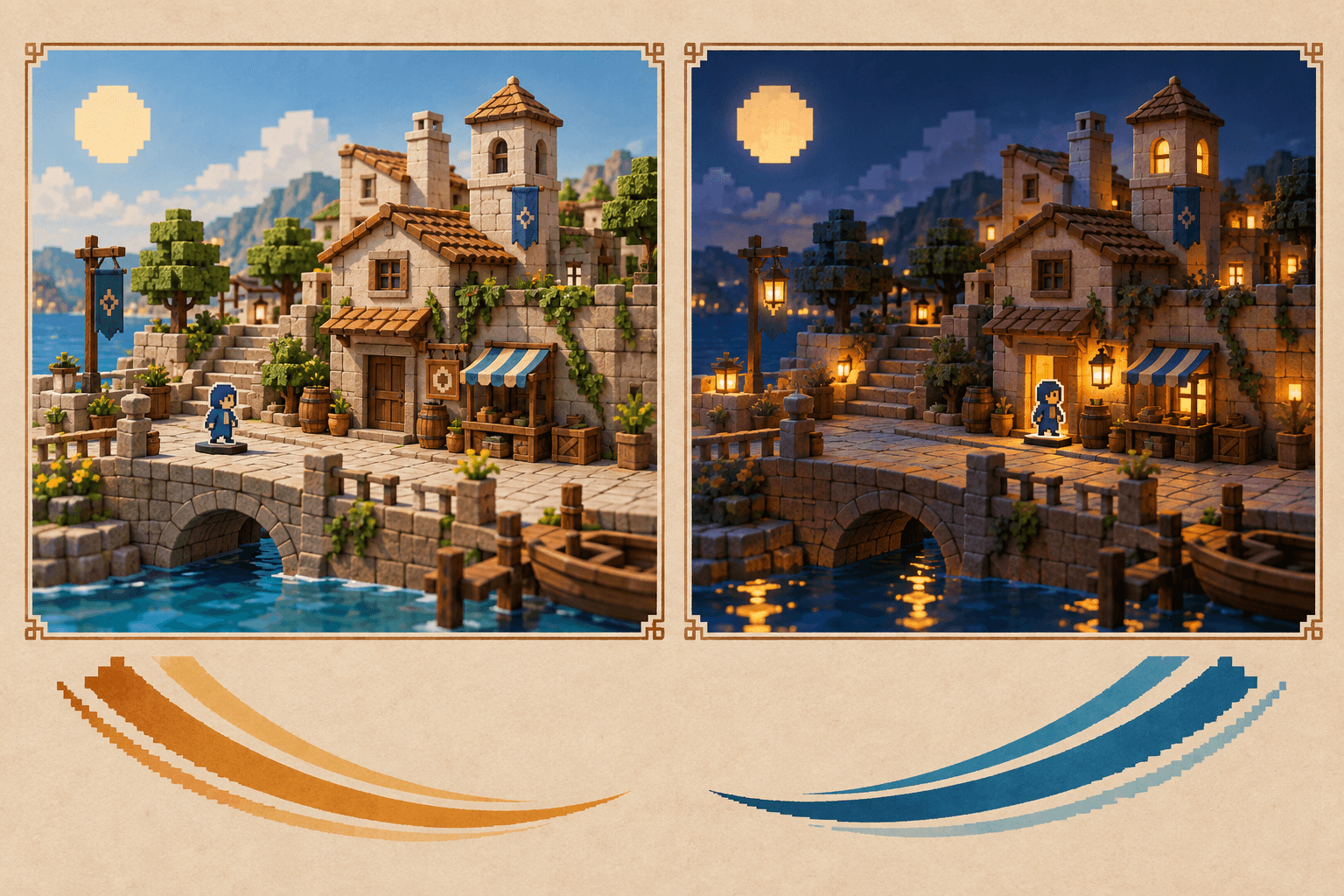
Before Octopath Traveler II’s release, director Keisuke Miyauchi linked day and night to the experience of travel and seeing different sides of residents. Composer Yasunori Nishiki described separate day and night music for towns and fields. The Japanese developer interview
This is also a specific visual category: Square Enix defines HD-2D as a combination of pixel art and 3D computer graphics. Treating it as an entirely flat pixel map would obscure that distinction. The official description
Here a return can change several cues together: the hour, the resident’s situation and the musical setting. The location supplies a point of comparison, while time supplies another reading of it. Miyauchi’s stated intention gives that return a purpose beyond covering new ground. Travel can include revisiting a place whose first appearance did not tell its whole story.
10. Space someone has to fill
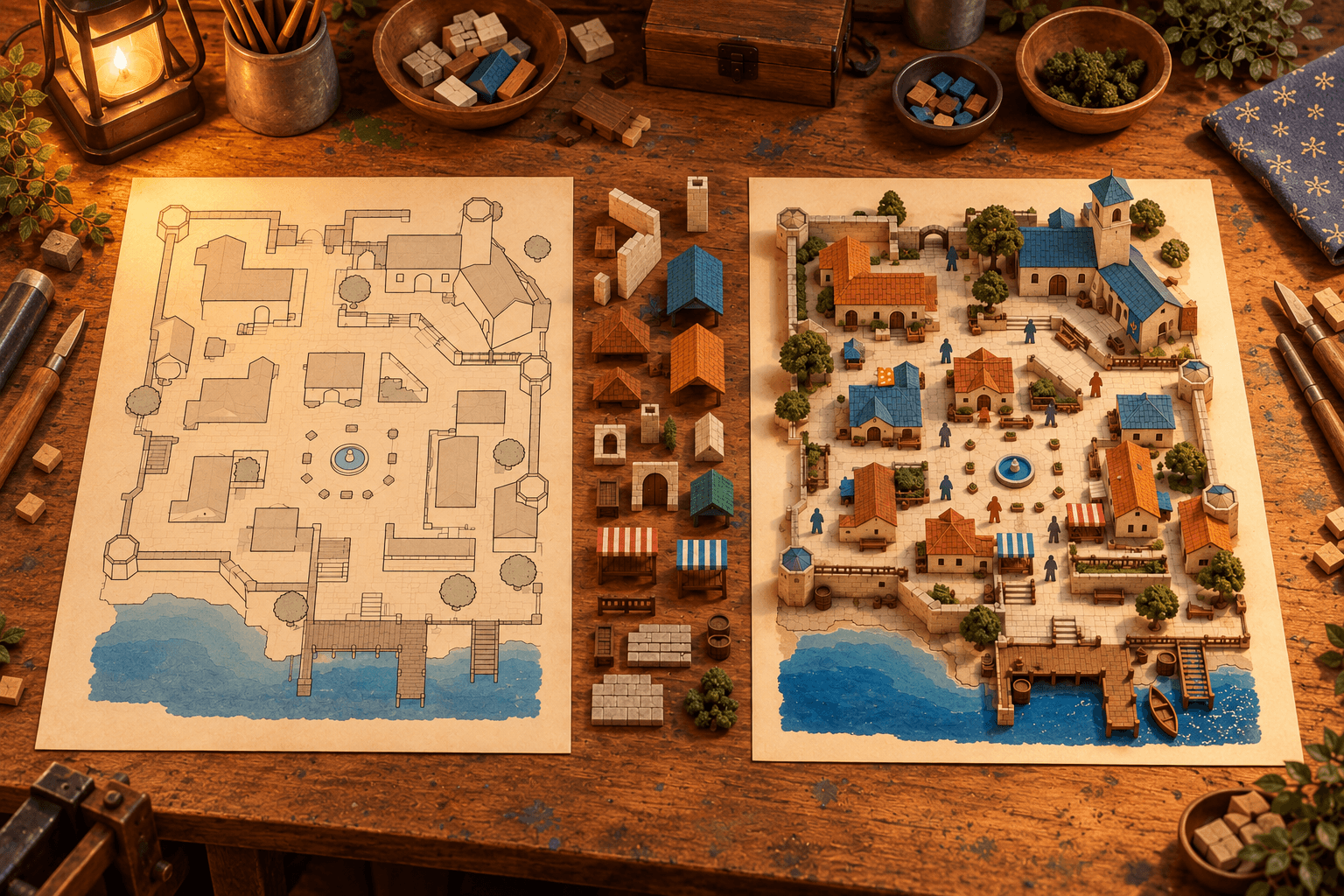
Asked about towns in Chained Echoes, Matthias Linda says he imagined substantial medieval cities and underestimated the effort of filling them with life. His answer appears in GeeklyGrind’s full interview, separately from the surrounding reviewer’s praise. Linda on town scope
He describes broad work across art, programming, quests and writing in a German interview. His production role In another English interview, he urges developers to integrate assets and systems early enough to find out whether they work together. His development advice
Scale therefore carries an obligation. Another street creates room for activity, but it also creates room that needs a reason to exist. A large plan and a functioning town are different achievements. Linda’s testimony makes the labour visible: drawing more space does not, by itself, supply its uses or connect them into a working whole.
These details point toward a town assembled across several kinds of time: the past preserved in an object, the hour implied by a light, the week organised by a routine and the future affected by a public choice. Small images can carry those relationships. The craft lies in choosing which connections to make visible, and doing enough work for those connections to hold.